Centipawn
A centipawn is one hundredth of a pawn, the unit chess engines use to measure how far a position is from equal.
Engines put a number on every position, and the scale is the pawn: an evaluation of +1.00 means White is better by about the value of one pawn, and that unit divides into 100 centipawns. Positive numbers favor White, negative numbers favor Black, and 0.00 is dead level.
The number is not only about material. Piece activity, king safety and pawn structure are all folded in, which is why an engine can show +2 in a position with equal material, or 0.00 when one side is a piece up but has no way to make progress.
Centipawns also grade your play. Average centipawn loss measures how much evaluation each of your moves gave away compared with the engine's best choice: top grandmasters can stay under 20 in classical games, while club players usually land somewhere between 30 and 80.
Frequently asked
What does an evaluation of +0.5 mean?
White is better by about half a pawn, or 50 centipawns. Edges under one pawn are real but rarely decisive by themselves; converting them usually comes down to who plays the position better.
What is average centipawn loss?
It is the average amount of evaluation you gave away per move compared with the engine's first choice. Lower is better, and it is a more stable measure of quality than the result of any single game.
Related terms
BetterChess is a practice tool — we make no guarantee you'll reach 1800 or any rating. Definitions are standard chess terminology; every diagram position is checked legal with the same engine the board runs.
PRINTED CHESS PUZZLE CARDS
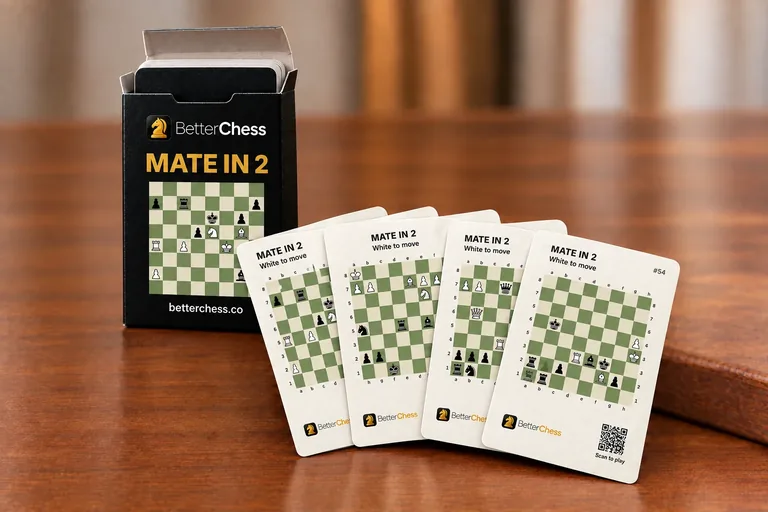
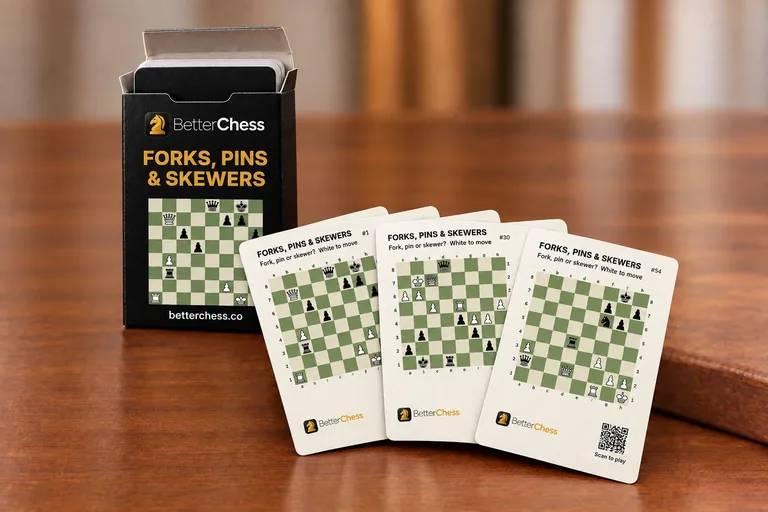
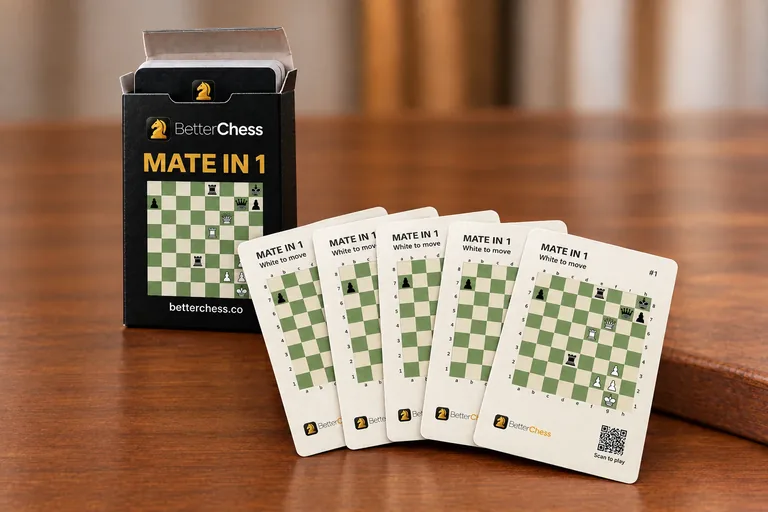
Chess puzzle playing card decks
54 poker-size cards in a tuck box. Puzzle on the front, solution on the back.