Accuracy
Accuracy is a percentage score from game review that measures how closely your moves matched the engine's preferred choices.
When you analyze a finished game, review tools compare every move you played against a strong engine. Moves that keep the evaluation steady score well, small inaccuracies cost a little, and outright blunders drag the percentage down hard. A score of 100 means you matched the engine almost move for move.
The number depends heavily on the type of game. Quiet, simplified positions make high accuracy easy, while sharp fights punish everyone's percentage, so a 92 in a calm endgame grind can mean less than an 85 in a tactical brawl. Treat it as a trend across many games rather than a verdict on one.
The practical use is finding leaks. Instead of chasing the percentage itself, open your two or three biggest evaluation drops in each game and work out what you missed; that is where the rating points actually live.
Frequently asked
Is 90 percent accuracy good?
In a rapid game at club level, yes, very. Most club players average in the 70s and 80s, and scores above 90 usually come from clean games without sharp complications.
Why was my accuracy high in a game I lost?
One blunder is enough to lose a game while barely denting a percentage averaged over 40 moves. Accuracy measures overall closeness to the engine; the result is decided by your single worst moment.
Related terms
BetterChess is a practice tool — we make no guarantee you'll reach 1800 or any rating. Definitions are standard chess terminology; every diagram position is checked legal with the same engine the board runs.
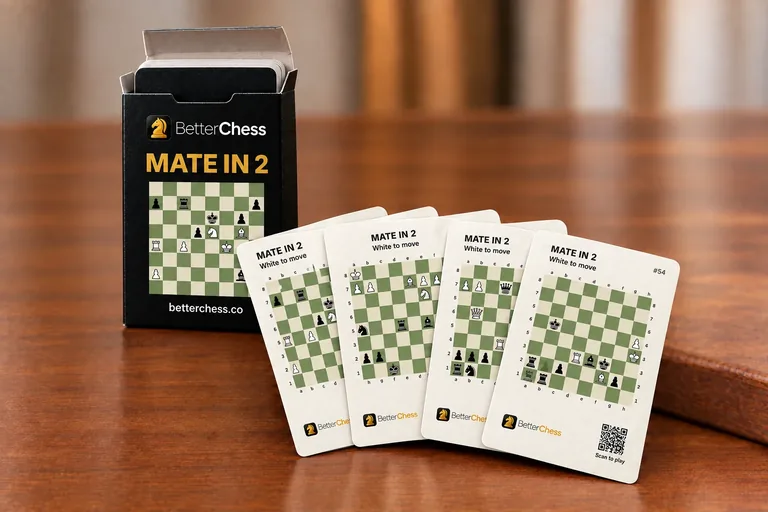
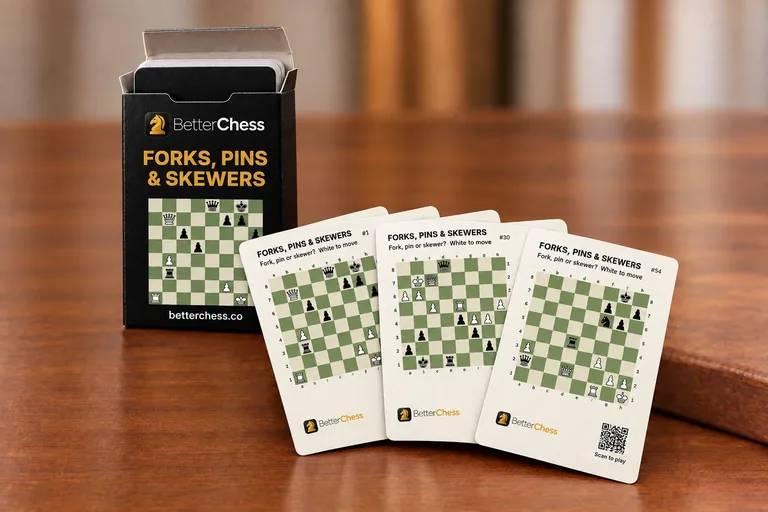
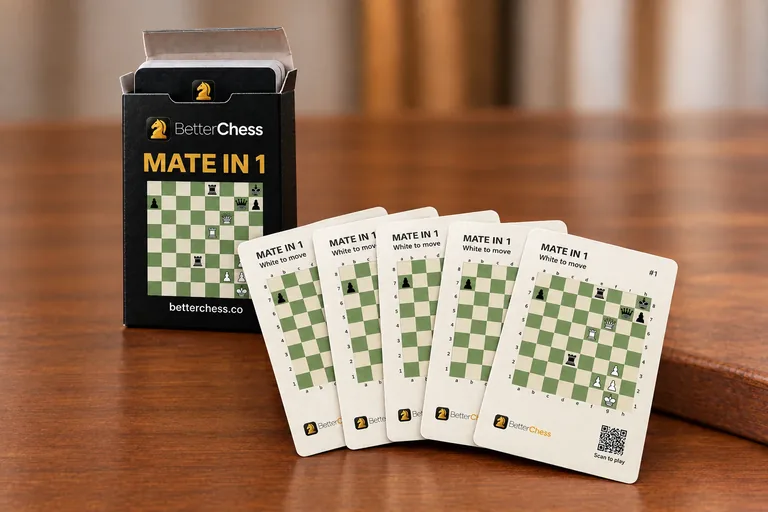
PRINTED CHESS PUZZLE CARDS
Chess puzzle playing card decks
54 poker-size cards in a tuck box. Puzzle on the front, solution on the back.