Engine Evaluation
An engine evaluation is a number stating who is better and by how much, measured in pawns from White's point of view.
Positive numbers favor White and negative numbers favor Black: +1.5 means White is better by about a pawn and a half, and 0.00 is balanced. When the engine finds a forced mate the number is replaced by a mate score, such as #3 for mate in three.
The number comes from deep search plus a trained evaluation, and it folds in everything at once: material, activity, king safety, structure. It also moves with depth, so a quick +0.8 can become 0.00 once the engine sees the resource it was missing; let the analysis settle before trusting a number.
Use evaluations as a metal detector, not as the treasure. The bar tells you where your game turned, but the improvement comes from working out why the move was bad and what you should have looked for. A club player who understands a +1 plan beats one who can only quote the number.
Frequently asked
What does an evaluation of +2 mean?
White stands better by roughly the value of two pawns, folded together from material and every positional factor. It is usually a winning advantage with accurate play, but it is a judgment about the position, not a guarantee.
Why does the evaluation keep changing while the engine runs?
Deeper search finds moves that shallow search missed, for either side. The number converges as depth grows, which is why serious analysis lets the engine think for a while rather than grabbing its first reading.
Related terms
BetterChess is a practice tool — we make no guarantee you'll reach 1800 or any rating. Definitions are standard chess terminology; every diagram position is checked legal with the same engine the board runs.
PRINTED CHESS PUZZLE CARDS
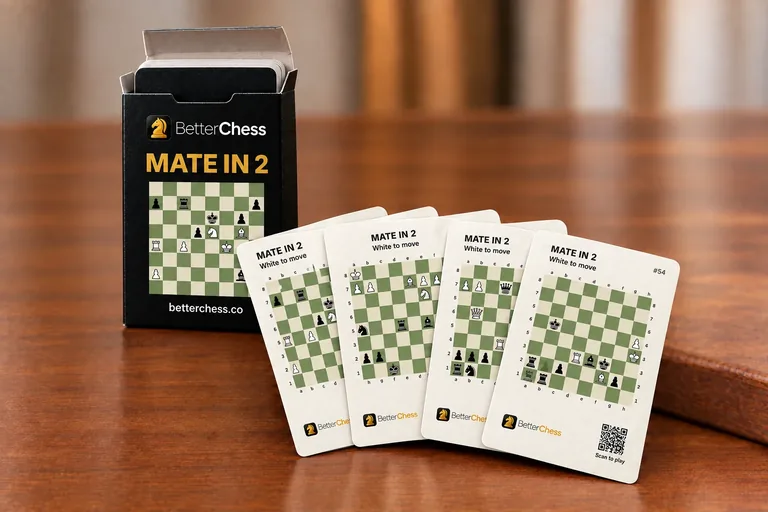
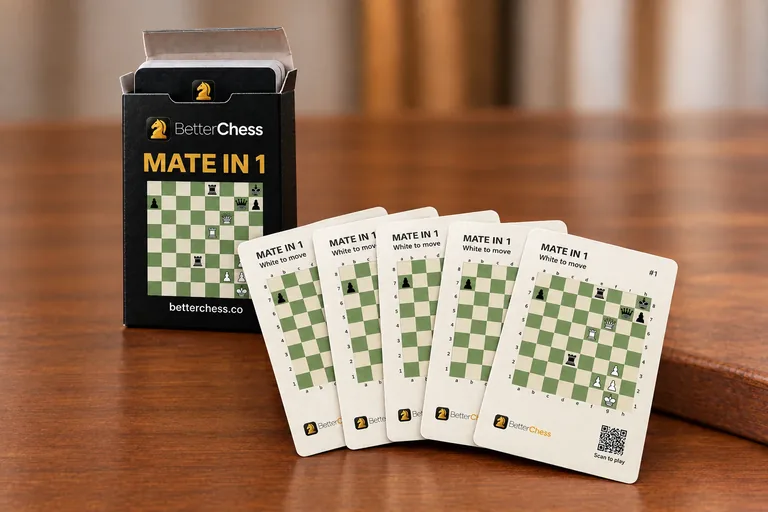
Chess puzzle playing card decks
54 poker-size cards in a tuck box. Puzzle on the front, solution on the back.