Candidate Moves
Candidate moves are the small set of plausible moves you shortlist in a position before calculating any single line deeply.
Popularized by Alexander Kotov in Think Like a Grandmaster, the idea is simple: before diving down one line, scan the position and write a mental shortlist of every move worth serious attention: checks, captures, threats, and the key positional options.
The discipline prevents the two classic calculation errors. First, tunnel vision: analyzing one tempting move for ten minutes while the real star move never gets a look. Second, drift: hopping between lines at random and calculating the same branch three times.
In practice, two to four candidates cover most positions. List them first, calculate each one once with discipline, then compare the endpoints. If your chosen move fails at the end of the line, return to the shortlist rather than inventing a new move mid-calculation.
Frequently asked
How many candidate moves should I consider?
Usually two to four. Always include forcing moves, checks, captures, and threats, plus the main positional options. More than five usually means you are not evaluating, just listing.
Who invented the candidate moves method?
Alexander Kotov made it famous in Think Like a Grandmaster, arguing you should fix your candidates first and analyze each branch only once. Modern players apply it more flexibly, but the shortlist habit remains standard training.
Related terms
BetterChess is a practice tool — we make no guarantee you'll reach 1800 or any rating. Definitions are standard chess terminology; every diagram position is checked legal with the same engine the board runs.
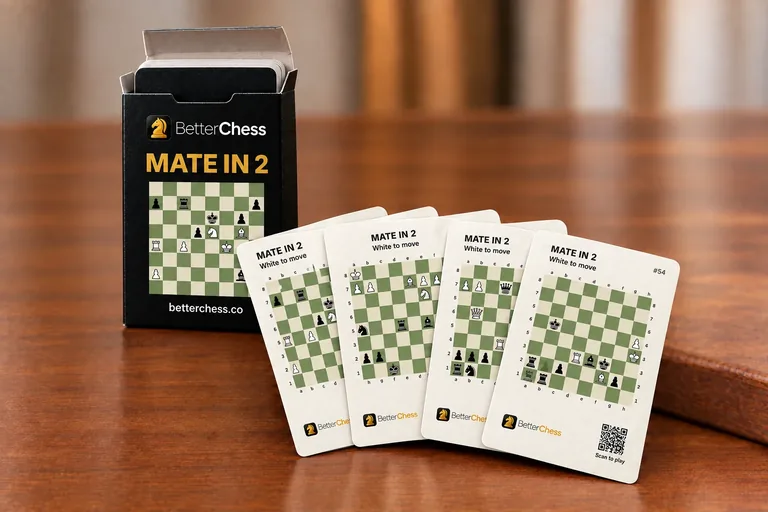
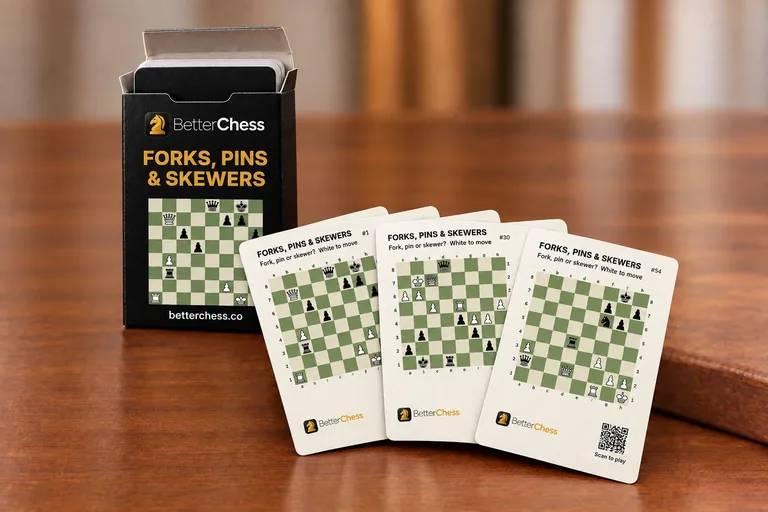
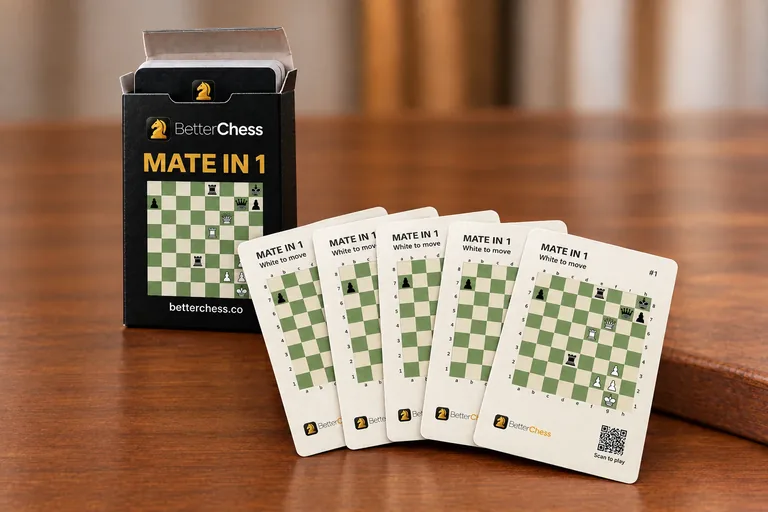
PRINTED CHESS PUZZLE CARDS
Chess puzzle playing card decks
54 poker-size cards in a tuck box. Puzzle on the front, solution on the back.