Jobava London System
Starting position
Engine ready — step through to see live evals.
Press ▶ Watch to play the line out, or Next to step through it — the engine evaluates every position.
The Jobava London mixes the solid London System with real venom: White plays Nc3 before c3, so the quiet Bf4 setup suddenly comes with concrete threats like the Nb5 jump, a fast e4 break and kingside pawn storms. Developed by Georgian grandmaster Baadur Jobava and taken up by Richard Rapport, it is modern, low on theory and full of tricks, which makes it a perfect club weapon.
The idea in one line
Develop with d4, Nc3 and Bf4, keep the setup flexible, and use the concrete threats (Nb5 hitting c7, a timely e4 or h4) to drag opponents out of their comfort zone by move five.
Key ideas
- Nc3 instead of the London's usual c3 is the whole point: White develops faster and keeps both e4 and Nb5 ideas alive.
- The bishop on f4 covers c7, which is why Nb5 is a real threat: Nc7+ would fork king and rook with the bishop's support.
- The system has two faces: calm chess with e3, Bd3 and short castling, or aggression with f3, g4, h4 and castling long.
- It is genuinely respectable: Jobava, Rapport and other strong grandmasters have used it against elite opposition, and the theory load is a fraction of main-line 1.d4.
Plans for each side
White: Play d4, Nc3 and Bf4, then react to Black: meet ...c5 with e3 and the Nb5 jump, meet quiet setups with Bd3 and short castling, or go for f3, g4 and opposite-side castling when the position invites a direct attack.
Black: Challenge the centre with ...c5 or develop solidly with ...e6, but respect the Nb5 trick: keep c7 covered or be ready with the central counter ...e5. Sensible development and a timely strike at d4 neutralize most of White's ideas.
Common mistakes to avoid
- The setup only bites if you use the concrete tricks; played on autopilot it is just a slightly loose London.
- Watch the d4-pawn: after ...c5 and ...Nc6 it comes under real pressure, which is exactly why the e3 and Nb5 resources matter.
- The Nb5 jump is strong but not automatic: if Black has the ...e5 counter or a check on a5 available, calculate before you commit.
The main line, explained
2. Nc3Nc3, the Jobava twist. In a normal London this knight sits behind a c3-pawn; here it develops actively and eyes b5 and e4.
3. Bf4Bf4, the London bishop: developed outside the pawn chain and already taking aim at c7.
3… c5...c5 is the critical strike at d4, trying to punish White for skipping c3.
4. e3e3 calmly supports d4 and opens the f1-bishop; White is ready for the coming jump.
4… Nc6...Nc6 develops naturally but allows White's signature idea.
5. Nb5Nb5, the point of the system: backed by the f4-bishop, the knight threatens Nc7+, and Black must respond precisely (the main antidote is the central break ...e5).
Frequently asked
Is the Jobava London better than the normal London System?
It is sharper, not strictly better. The classical London is more solid; the Jobava version trades a little solidity for speed and concrete threats. Many players keep both: the classical London as the workhorse, the Jobava as the surprise weapon.
Why does the Nb5 jump work here?
Because the f4-bishop covers c7. If the knight lands on c7 it forks king and rook, and capturing it with the queen runs into Bxc7, winning the queen for a knight and bishop. Black has good answers, but must know them.
Do strong players actually use the Jobava London?
Yes. Baadur Jobava built it into a complete system and Richard Rapport has used it against world-class opposition. It is not a refuted trick line: it is a legitimate, aggressive system with a light theory load.
More openings to explore
London System
Queen's Pawn (1.d4) · D02
Learn & play ›Veresov Attack
Queen's Pawn (1.d4) · D01
Learn & play ›Knowing the moves of the Jobava London System is not the same as knowing why they work. Use Claude? BetterChess gives it a real engine, so it explains this opening from the board in front of you instead of from memory.
BetterChess is a practice tool — we make no guarantee you'll reach 1800 or any rating. The lines here are standard, well-established opening theory, and every move is checked legal with the same engine the board runs.
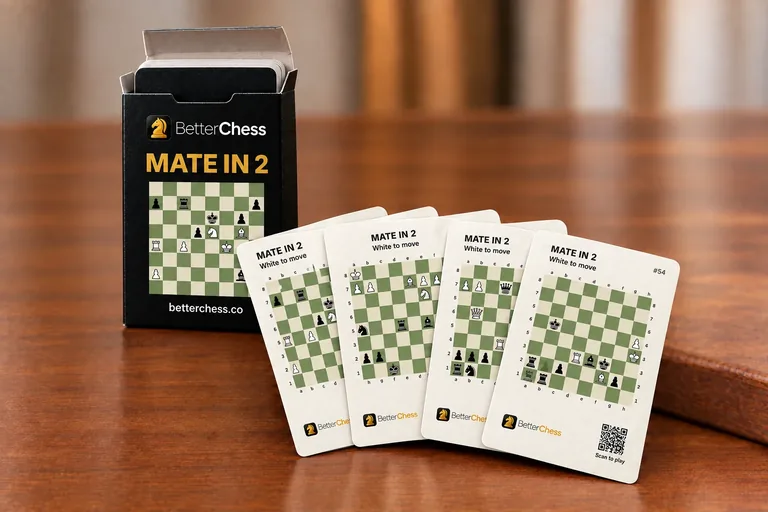
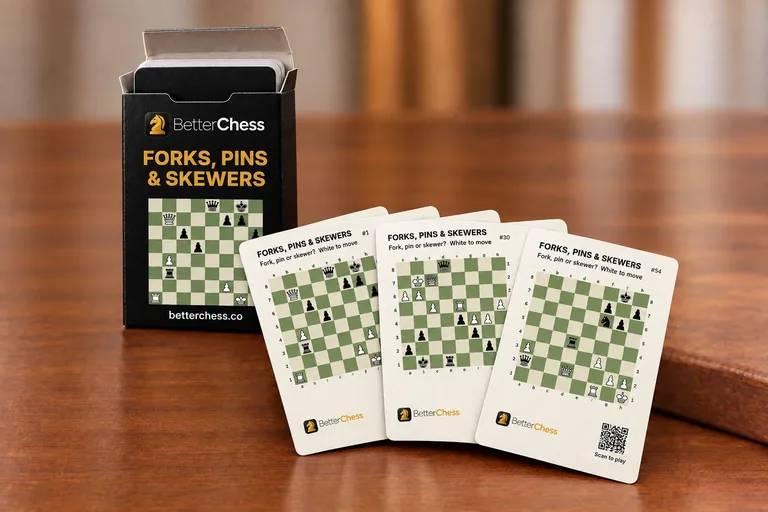
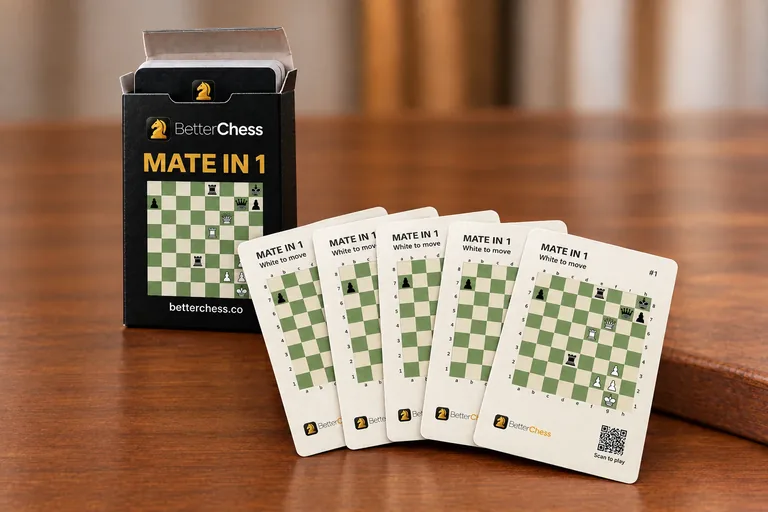
PRINTED CHESS PUZZLE CARDS
Chess puzzle playing card decks
54 poker-size cards in a tuck box. Puzzle on the front, solution on the back.