Weak Square
A weak square (or ‘hole’) is a square that can no longer be defended by any of your pawns, so an enemy piece can settle there safely.
Every pawn move is permanent, and pushing a pawn gives up control of the squares it used to guard. When neither neighbouring pawn can ever cover a square again, that square becomes a hole.
A hole matters most when it’s near your king or in the centre, because the opponent can plant a piece there — often a knight — that you can’t challenge with a pawn. The square then becomes an outpost for them.
Weak squares usually come in colour complexes: trade off a fianchettoed bishop, for example, and all the squares of that colour around your king can go soft at once. Think before every pawn push about what it permanently concedes.
Frequently asked
What’s the difference between a weak square and a weak pawn?
A weak square is an empty square pawns can’t defend; a weak pawn is a pawn that’s hard to defend, like an isolated or backward pawn. They often appear together.
Is a hole the same as a weak square?
Yes — ‘hole’ is just the common informal name for a square that can no longer be guarded by a pawn.
Related terms
BetterChess is a practice tool — we make no guarantee you'll reach 1800 or any rating. Definitions are standard chess terminology; every diagram position is checked legal with the same engine the board runs.
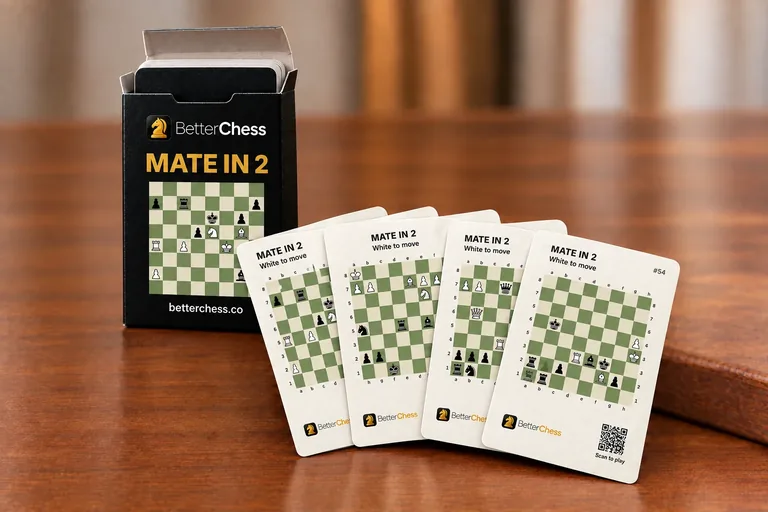
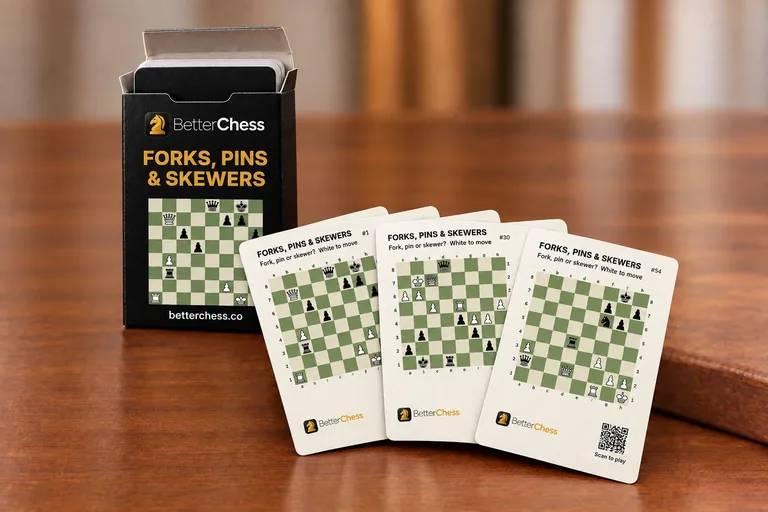
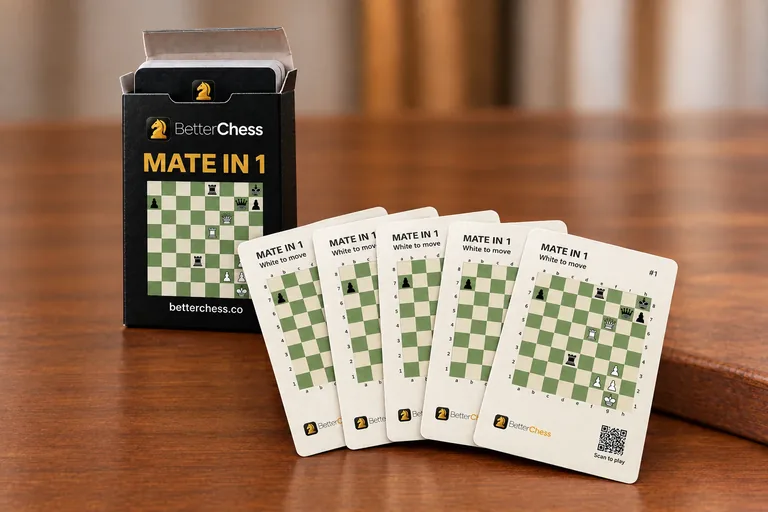
PRINTED CHESS PUZZLE CARDS
Chess puzzle playing card decks
54 poker-size cards in a tuck box. Puzzle on the front, solution on the back.