Outpost
An outpost is a square, usually in or near enemy territory, that your pawn defends and no enemy pawn can attack — an ideal home for a piece, especially a knight.
Because an outpost is protected by one of your pawns and can never be challenged by an enemy pawn, a piece parked there is almost impossible to dislodge without a costly trade.
Knights make the best use of outposts: a knight planted on, say, d5 or e5 radiates threats and can be worth far more than its usual value. To kick it the opponent must give up a more valuable piece for it.
Look for outposts on half-open files and around holes in the enemy structure. A well-placed knight on an outpost is one of the surest long-term advantages in chess.
Frequently asked
What makes a good outpost?
A square your pawn defends, that the opponent can’t attack with a pawn, ideally on the 5th or 6th rank where it sits deep in their position.
Why are knights so strong on outposts?
A knight doesn’t need open lines to be effective, so a secure advanced square lets it hit targets the opponent can’t easily defend — and it can’t be chased off by a pawn.
Related terms
BetterChess is a practice tool — we make no guarantee you'll reach 1800 or any rating. Definitions are standard chess terminology; every diagram position is checked legal with the same engine the board runs.
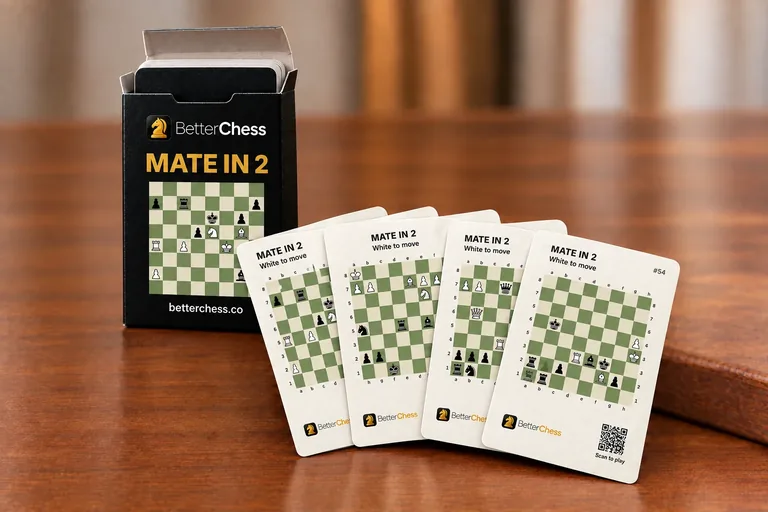
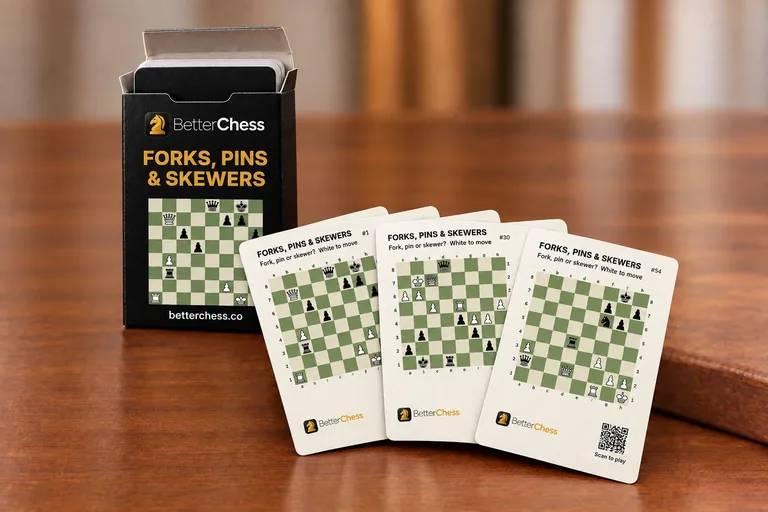
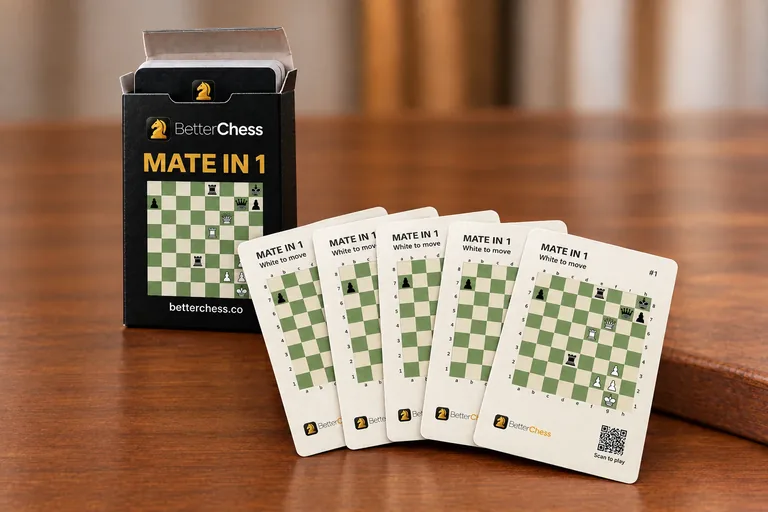
PRINTED CHESS PUZZLE CARDS
Chess puzzle playing card decks
54 poker-size cards in a tuck box. Puzzle on the front, solution on the back.