Simultaneous Exhibition
A simultaneous exhibition, or simul, is an event where one strong player takes on many opponents at once, walking from board to board and making one move at each.
In a simul the boards are arranged in a ring or rows, the exhibitor conventionally takes White on every board, and they walk the circuit making one move per board. You make your reply when the master arrives at your board, so their tour of the room is your thinking time.
Great players have made the format legendary. José Raúl Capablanca once faced 103 opponents in a single session in Cleveland in 1922 and scored 102 wins and one draw. Blindfold simuls, where the exhibitor sees no boards at all, are their own famous subgenre.
If you get to play one: prepare a solid opening, keep the position closed rather than trading into a technical endgame the master will grind out, and think on their circuit time. Scoring even a draw against a titled player in a simul is a keepsake result, and wins do happen.
Frequently asked
How does a simul work for the opponents?
You sit at your board, usually with the black pieces, and make your move when the exhibitor arrives at your board. You get their whole circuit of the room to think; they get seconds per game.
Has anyone won a huge simul outright?
José Raúl Capablanca famously scored 102 wins and one draw against 103 opponents in a single session in Cleveland in 1922, one of the most one-sided large simuls ever recorded.
Related terms
BetterChess is a practice tool — we make no guarantee you'll reach 1800 or any rating. Definitions are standard chess terminology; every diagram position is checked legal with the same engine the board runs.
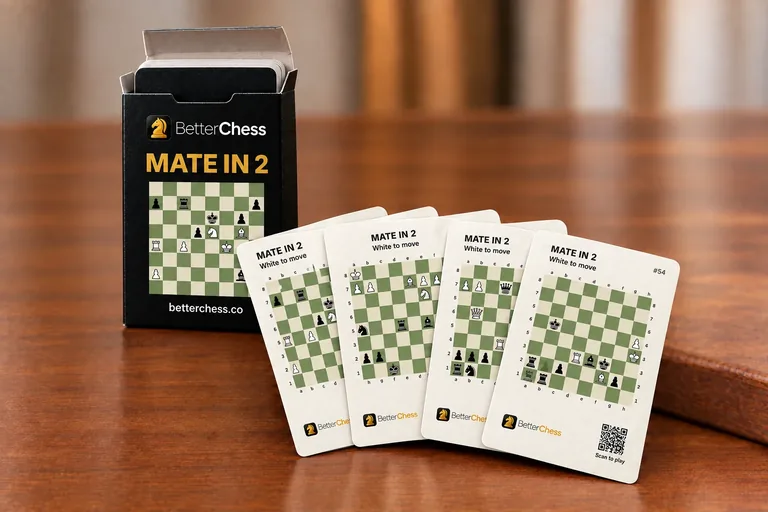
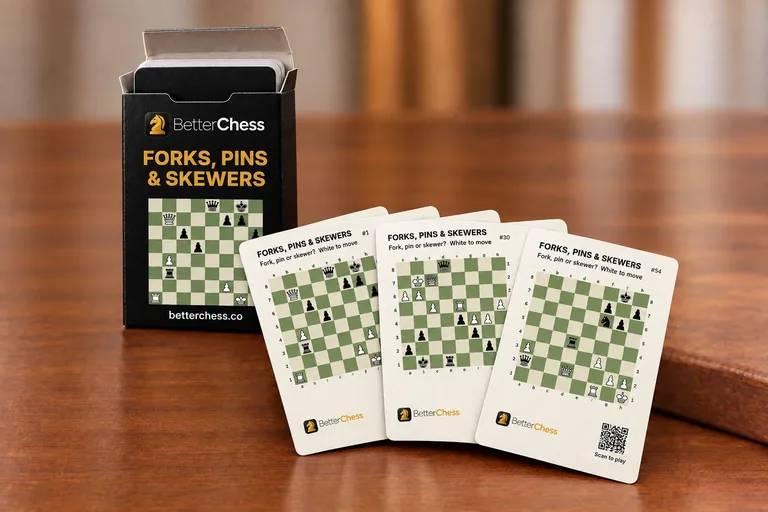
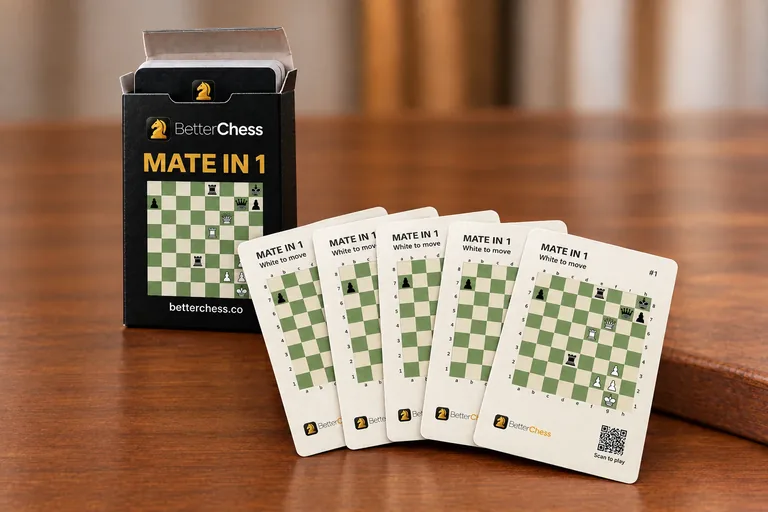
PRINTED CHESS PUZZLE CARDS
Chess puzzle playing card decks
54 poker-size cards in a tuck box. Puzzle on the front, solution on the back.