Simplification
Simplification means trading pieces to reduce the number of men on the board, typically to convert a material edge or to blunt an opponent's attack.
The basic law of trading: the side ahead in material wants exchanges, the side behind wants chaos. Every pair of pieces that leaves the board makes the extra material a bigger share of what remains, until the endgame where an extra piece or pawn simply wins.
Simplification is also a defensive weapon. Attacks need attackers: trading queens or the opponent's key attacking piece can turn a scary position into a dull, holdable one. That is why the attacker usually avoids exchanges and the defender offers them.
Trade with purpose, not by reflex. Swap your bad pieces for their good ones, keep the pieces that fit the coming endgame, and remember that trading pawns generally helps the defender while trading pieces helps the side that is up material.
Frequently asked
Why should the side with more material trade pieces?
Because each trade makes the extra material a larger fraction of the remaining force. A knight up with queens on can be messy; a knight up in a pawn endgame is trivial.
Does simplification mean trading everything?
No. You trade the pieces that help your opponent, their attackers, their active pieces, and keep the ones that dominate the coming endgame. Mindless trading can throw away a win, especially trading pawns when ahead.
Related terms
BetterChess is a practice tool — we make no guarantee you'll reach 1800 or any rating. Definitions are standard chess terminology; every diagram position is checked legal with the same engine the board runs.
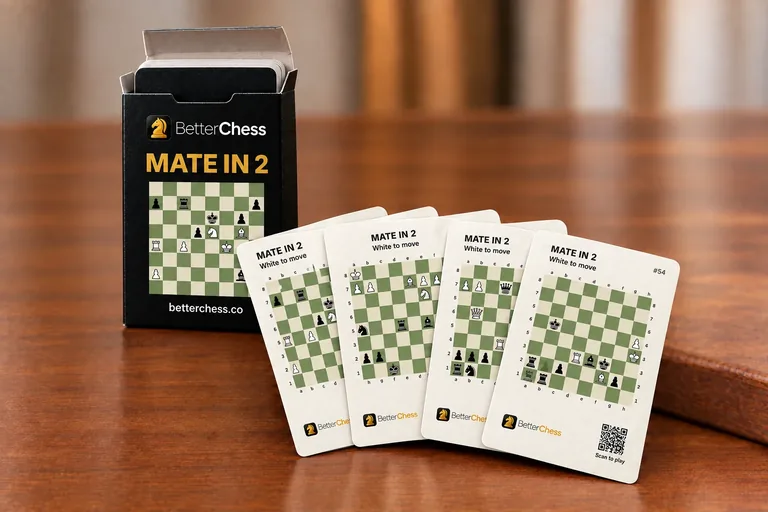
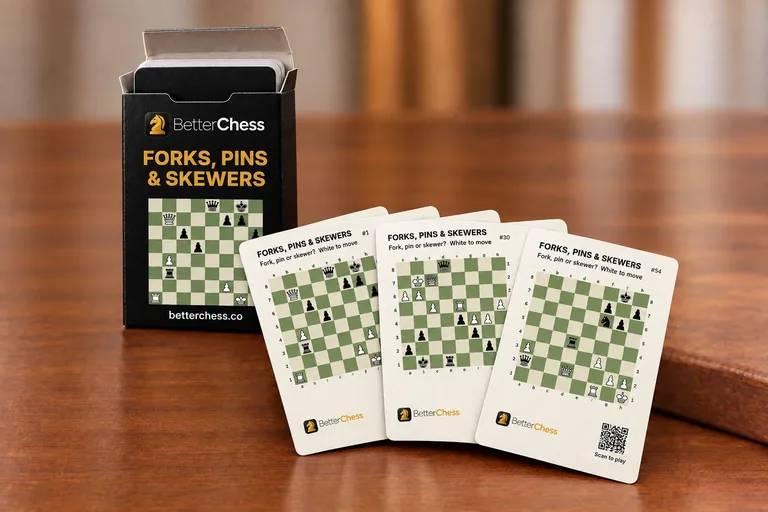
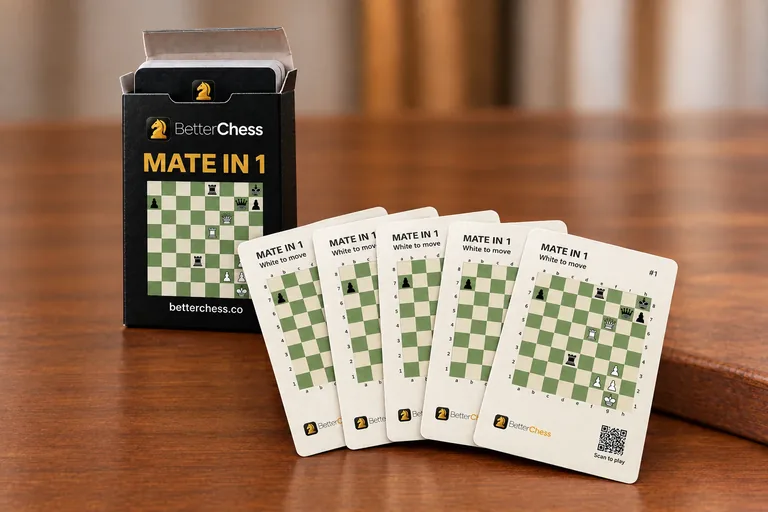
PRINTED CHESS PUZZLE CARDS
Chess puzzle playing card decks
54 poker-size cards in a tuck box. Puzzle on the front, solution on the back.