Sideline
A sideline is a playable but less common alternative to an opening's main line, chosen more for surprise and practical value than for objective ambition.
Wherever the theory tree branches, the moves that are not the main line are sidelines. Some are respectable options a shade less critical than the main move; others are dubious byways theory has already answered. The label says how often strong players choose the move, not necessarily how good it is.
The case for sidelines is practical. They drag opponents out of their preparation onto ground you know better, they cut your memorization workload dramatically, and in faster time controls the surprise value alone wins games. The cost is objective: against precise play a sideline usually promises equality or a smaller edge than the main line would.
The skill is choosing well. Prefer sidelines that grandmasters occasionally trust, learn the two or three critical replies, and be honest when theory has genuinely answered your pet line. A sound sideline you understand deeply is one of the best practical weapons a club player can own.
Frequently asked
Are sidelines bad moves?
Not necessarily. Many are perfectly sound, just less ambitious or less fashionable than the main line. The dubious ones are a different story: if theory shows a forced route to an edge against your sideline, expect prepared opponents to know it.
When is a sideline the right practical choice?
When you want to avoid an opponent's deep preparation, when your study time is limited, or in rapid and blitz where surprise pays. Pick one with a solid reputation and learn its typical middlegame plans rather than long forced lines.
Related terms
BetterChess is a practice tool — we make no guarantee you'll reach 1800 or any rating. Definitions are standard chess terminology; every diagram position is checked legal with the same engine the board runs.
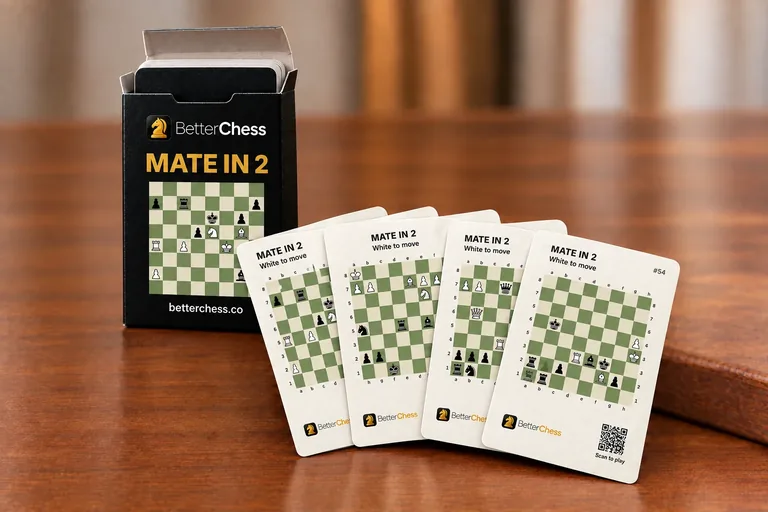
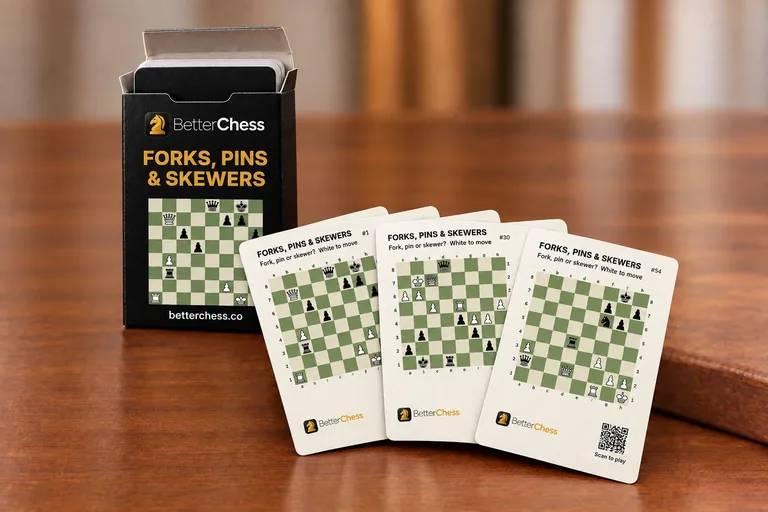
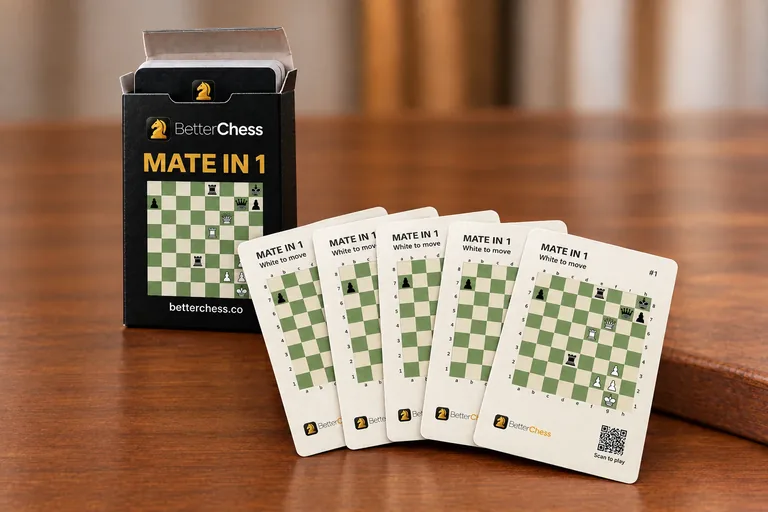
PRINTED CHESS PUZZLE CARDS
Chess puzzle playing card decks
54 poker-size cards in a tuck box. Puzzle on the front, solution on the back.