Resignation
Resignation is conceding the game: a player who resigns loses immediately. It is usually announced verbally or by stopping the clocks; tipping over the king is the traditional gesture.
You can resign at any moment it is legal to do something at the board: say 'I resign' clearly, or stop the clocks and offer your hand. Tipping over your own king is the traditional gesture, but pair it with words, because ambiguous gestures cause disputes. Resignation is final and immediate, even if the position was not actually lost.
When to resign is a matter of level. Masters resign a clean queen down because their opponents convert flawlessly, so playing on wastes everyone's time. At club level the calculus is different: opponents still blunder pieces back, stalemate traps are real, and a lost position plus a ticking clock has saved countless half points.
Our advice for the 1100 to 1800 range: almost never resign before serious material is gone and counterplay is dead, and never resign in frustration one move after a blunder. When you do resign, do it gracefully; when your opponent plays on in a lost position, converting cleanly is part of your training too.
Frequently asked
How do you resign a chess game?
Say 'I resign' clearly or stop the clocks; tipping over your king is the traditional gesture but should be paired with words to avoid confusion. Resignation ends the game immediately as a loss.
When should I resign?
At club level, later than you think. Masters resign a clean queen down because their opponents convert flawlessly, but at 1100 to 1800 opponents still blunder, stalemate tricks exist, and playing on costs nothing but pride.
Related terms
BetterChess is a practice tool — we make no guarantee you'll reach 1800 or any rating. Definitions are standard chess terminology; every diagram position is checked legal with the same engine the board runs.
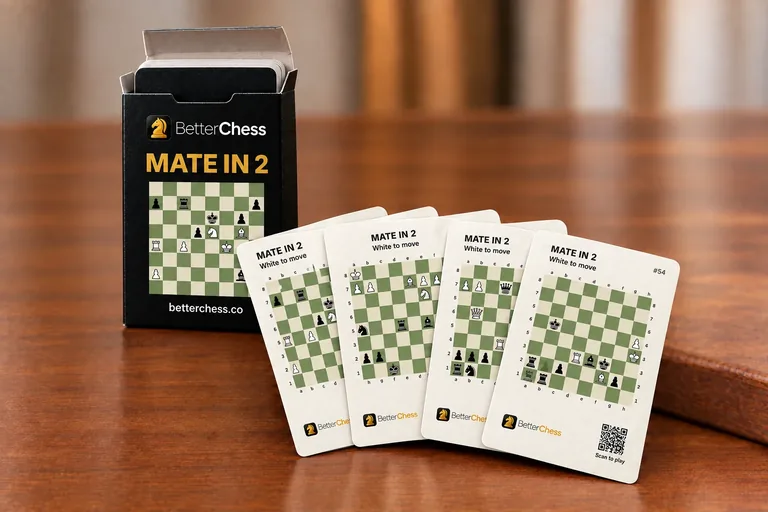
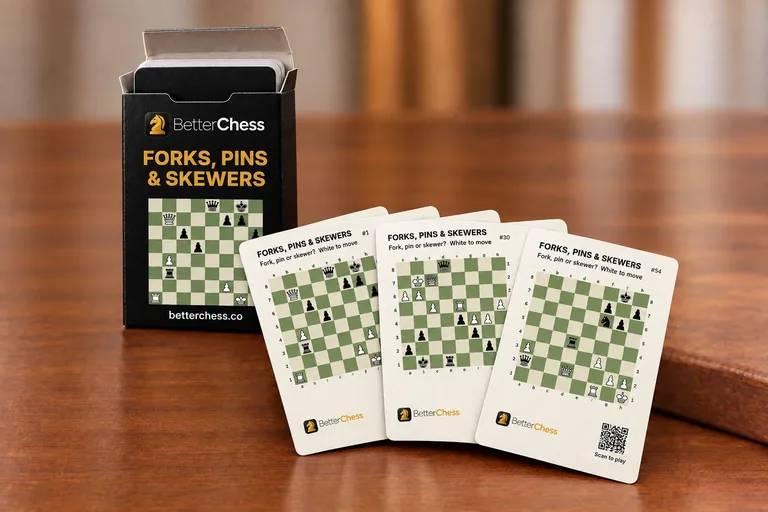
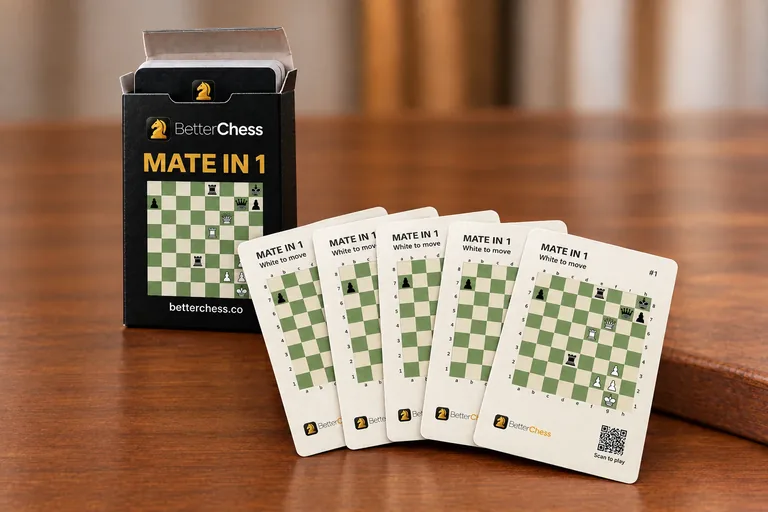
PRINTED CHESS PUZZLE CARDS
Chess puzzle playing card decks
54 poker-size cards in a tuck box. Puzzle on the front, solution on the back.