Pawn Race
A pawn race is an endgame sprint in which both sides push passed pawns toward promotion and the result hinges on who queens first and on what happens the moment both queens appear.
When neither king can catch the other side's passed pawn, the game becomes pure arithmetic: count the moves each pawn needs to promote, remembering whose turn it is. One tempo decides everything, which is why the rule of the square and exact counting matter so much here.
Queening first is usually enough, but the details bite. Promoting with check wins a whole extra move; a new queen that immediately skewers the enemy king against its about-to-promote pawn ends the race on the spot. If both sides queen, the resulting queen endgame is often still won for the side that queened first with an attack against the exposed king.
Know the saving resources too. A queen against a pawn on the seventh rank normally wins by forcing the king in front of the pawn and walking your own king closer, but against a rook pawn or bishop pawn the defender has stalemate tricks and draws when the attacking king is far away. A knight pawn or center pawn offers no such refuge.
Frequently asked
How do I know if I win a pawn race?
Count moves to promotion for both pawns, including whose move it is. Then check three things: does either side promote with check, does a new queen skewer or stop the other pawn, and is the slower pawn a rook or bishop pawn with stalemate resources.
Why do rook pawns and bishop pawns draw against a queen?
With the pawn on the seventh and the defending king beside it, the usual winning method forces the king in front of the pawn so the attacker gains a tempo. With a rook pawn or a bishop pawn the defender instead allows stalemate in the corner, so if the attacking king is too far away the game is drawn.
Related terms
BetterChess is a practice tool — we make no guarantee you'll reach 1800 or any rating. Definitions are standard chess terminology; every diagram position is checked legal with the same engine the board runs.
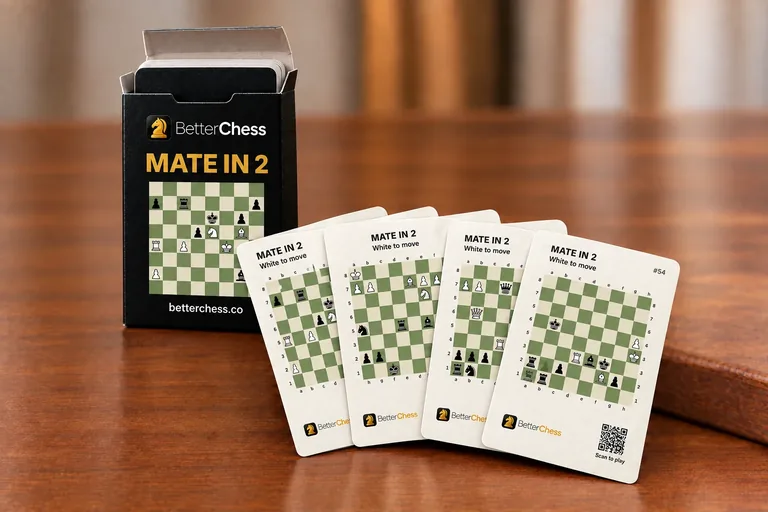
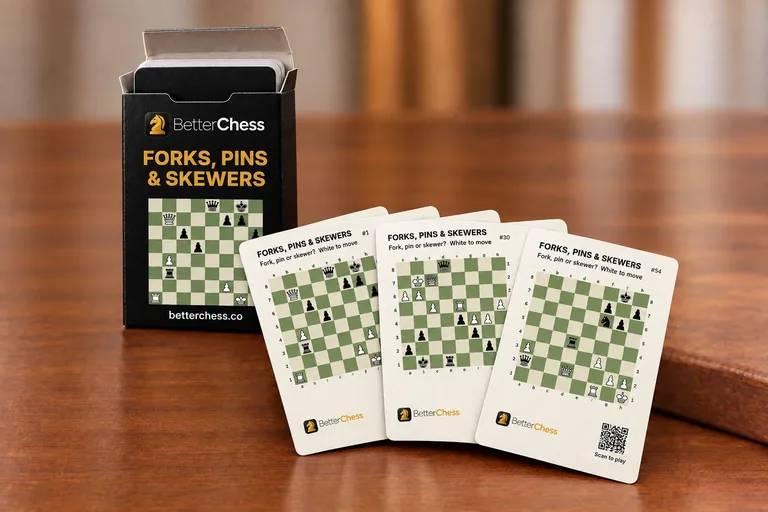
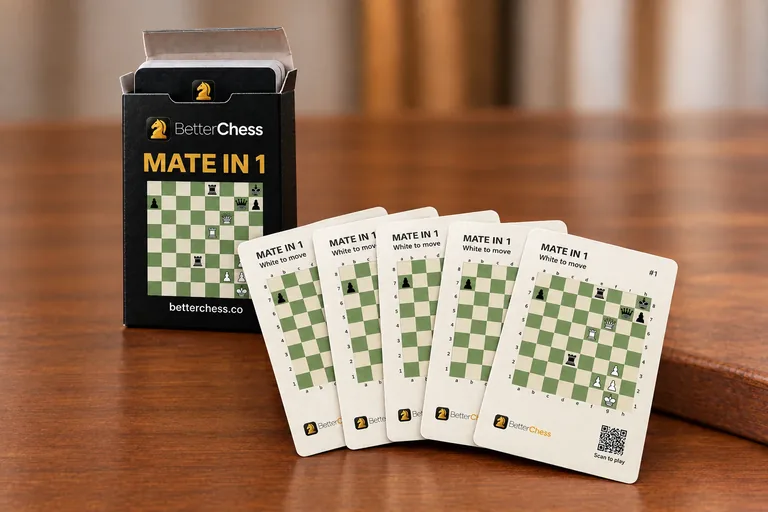
PRINTED CHESS PUZZLE CARDS
Chess puzzle playing card decks
54 poker-size cards in a tuck box. Puzzle on the front, solution on the back.