Promotion
Promotion is when a pawn reaches the opponent's back rank and is immediately replaced by a queen, rook, bishop or knight of the same colour.
When a pawn marches all the way to the 8th rank (for White) or the 1st rank (for Black), it must promote — it is removed and swapped for a stronger piece of your choice. Almost always that's a queen, the most powerful piece, which is why promotion is often just called ‘queening’.
You aren't forced to take a queen: you may also choose a rook, bishop or knight. Picking something other than a queen is called underpromotion, and it's occasionally the only winning move — a knight to deliver an immediate fork, or a rook or bishop to dodge a stalemate.
Because a far-advanced passed pawn can turn into a new queen, it's one of the most valuable assets in the endgame. Stopping the opponent's pawn from promoting — or shepherding your own home — frequently decides the game.
Frequently asked
Can you have two queens?
Yes. Promotion isn't limited by your captured pieces — if you promote a pawn while your original queen is still on the board, you'll have two (or more) queens.
What is underpromotion?
Choosing a rook, bishop or knight instead of a queen when a pawn promotes. It's rare, but a knight promotion can give a saving or winning fork, and a rook or bishop can avoid stalemating the opponent.
Related terms
BetterChess is a practice tool — we make no guarantee you'll reach 1800 or any rating. Definitions are standard chess terminology; every diagram position is checked legal with the same engine the board runs.
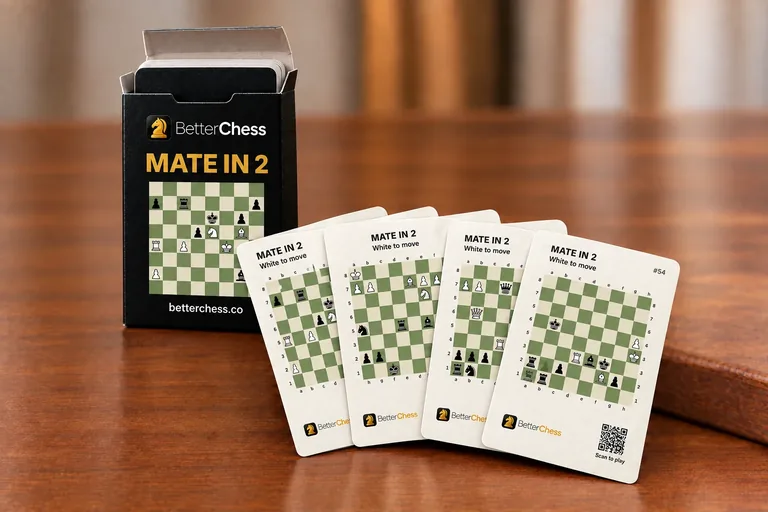
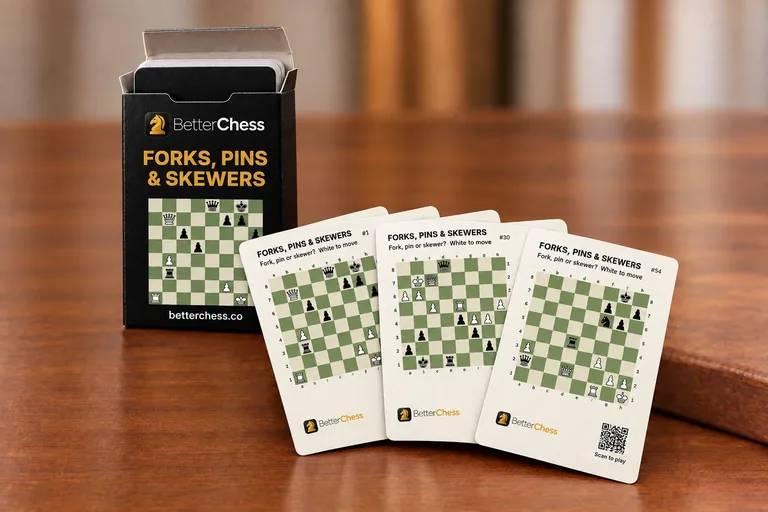
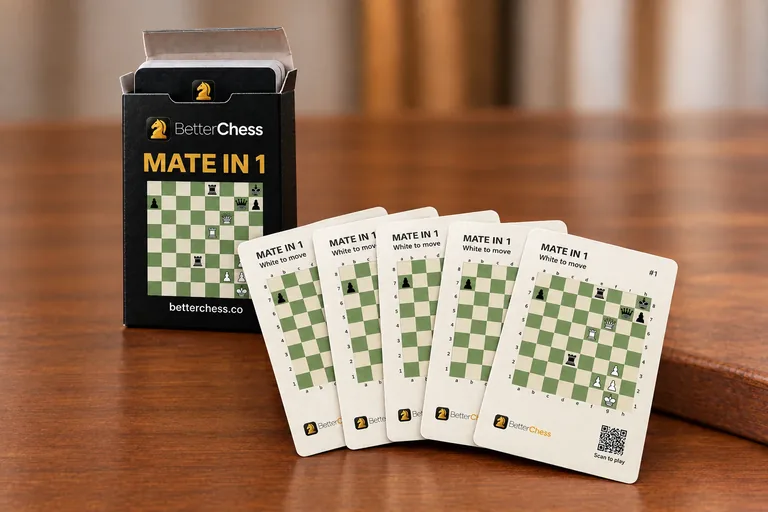
PRINTED CHESS PUZZLE CARDS
Chess puzzle playing card decks
54 poker-size cards in a tuck box. Puzzle on the front, solution on the back.