Overextension
Overextension means pushing pawns further than your pieces can support, so the advanced pawns and the squares behind them become lasting weaknesses.
Every pawn advance is double-edged: it gains space but permanently gives up control of the squares it leaves behind. Overextension is what happens when the gains stop and the weaknesses remain: far-advanced pawns that need constant babysitting and holes the opponent's knights move into.
Alekhine's Defence is built entirely on this gamble: Black's 1...Nf6 invites the pawns forward, and in the Four Pawns Attack White grabs c4, d4, e5, and f4. If the huge center holds, White simply wins with space; if Black's counterblows land, the same pawns become four targets and the position collapses behind them.
The warning signs: your pawns can no longer be defended by other pawns, your pieces are tied to guarding them, and every trade helps the opponent reach the holes. The cure is prevention: advance where you can support the gain, and prefer piece pressure when your structure is already stretched.
Frequently asked
How do I know if my pawns are overextended?
When pawns can no longer be protected by other pawns and your pieces are chained to defending them, you are overextended. If your opponent's pieces are settling into the squares behind your pawns, it has already happened.
How do you punish overextension?
Attack the base of the advanced chain with pawn breaks, trade the defenders of the weak squares, and occupy the holes with knights. The advanced pawns cannot retreat, so the weaknesses are permanent.
Related terms
BetterChess is a practice tool — we make no guarantee you'll reach 1800 or any rating. Definitions are standard chess terminology; every diagram position is checked legal with the same engine the board runs.
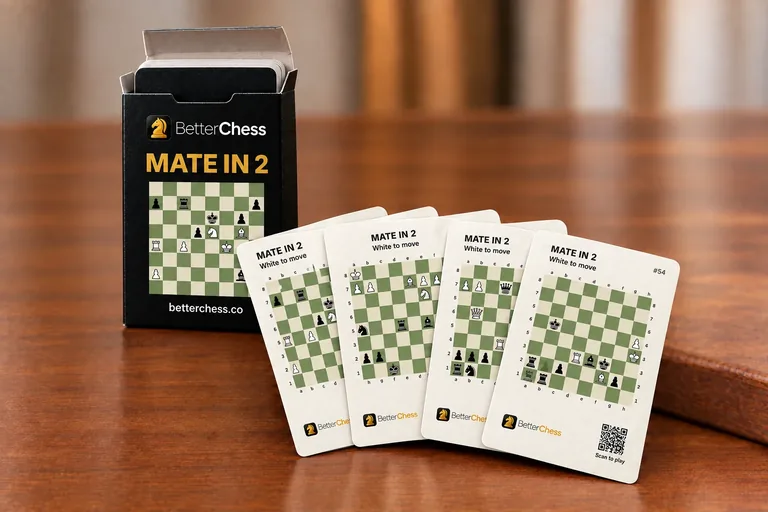
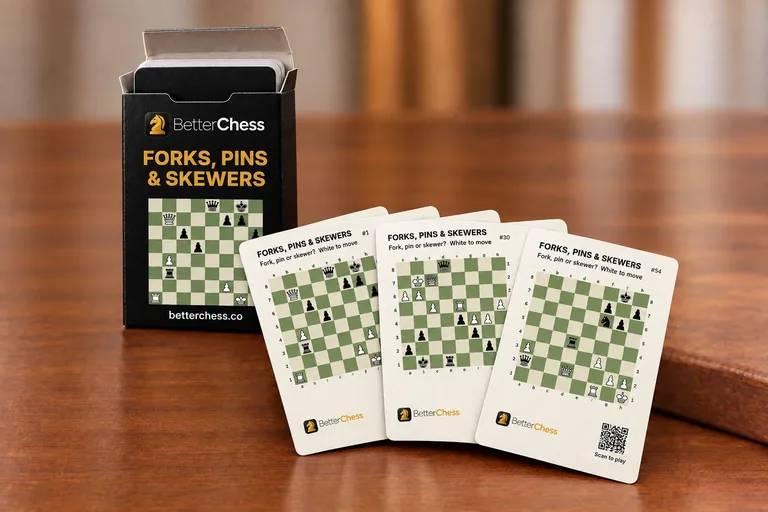
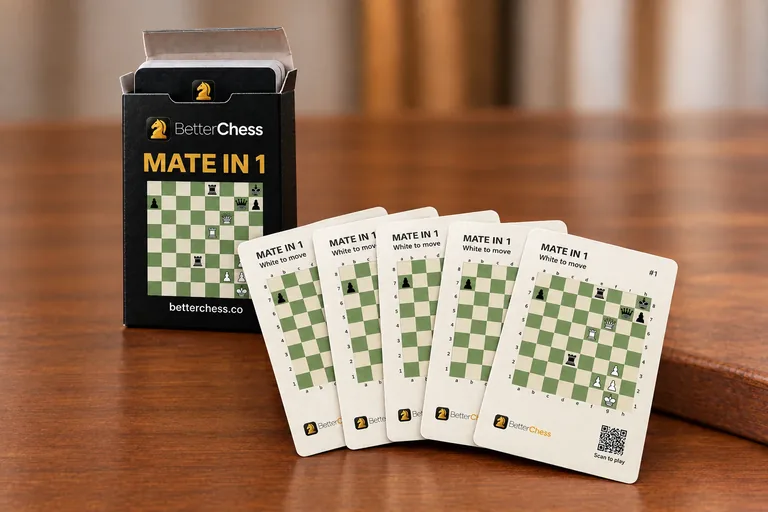
PRINTED CHESS PUZZLE CARDS
Chess puzzle playing card decks
54 poker-size cards in a tuck box. Puzzle on the front, solution on the back.