Double Attack
A double attack is any single move that creates two threats at the same time, so the opponent can parry only one of them.
Chess is a one-move-at-a-time game, which is exactly what a double attack exploits: you make two threats with one move, your opponent gets one move to answer, and simple arithmetic wins you the other threat. It is the logical skeleton behind most tactics.
The family has several branches. A fork is one piece attacking two targets at once. A discovered attack makes two threats with two different pieces, the one that moves and the one it unveils. Even a mating threat combined with an attack on a loose piece is a double attack: the mate must be met, so the piece falls.
To create double attacks, track your opponent's loose pieces and exposed king; to avoid suffering them, keep your pieces defended and off squares where one enemy move can hit two things. The strongest double attacks include a check or a mate threat, because those force the reply and leave the second target frozen.
Frequently asked
Is a fork the same thing as a double attack?
A fork is the most common type of double attack: one piece attacking two targets. Double attack is the broader idea and includes discovered attacks and any move that combines two threats, such as a mate threat plus an attack on a piece.
How do I avoid walking into double attacks?
Keep your pieces defended and connected, watch for enemy moves that gain tempo on your king or queen, and be suspicious of loose pieces on open lines. Most double attacks need an undefended target, so tidiness prevents them.
Related terms
BetterChess is a practice tool — we make no guarantee you'll reach 1800 or any rating. Definitions are standard chess terminology; every diagram position is checked legal with the same engine the board runs.
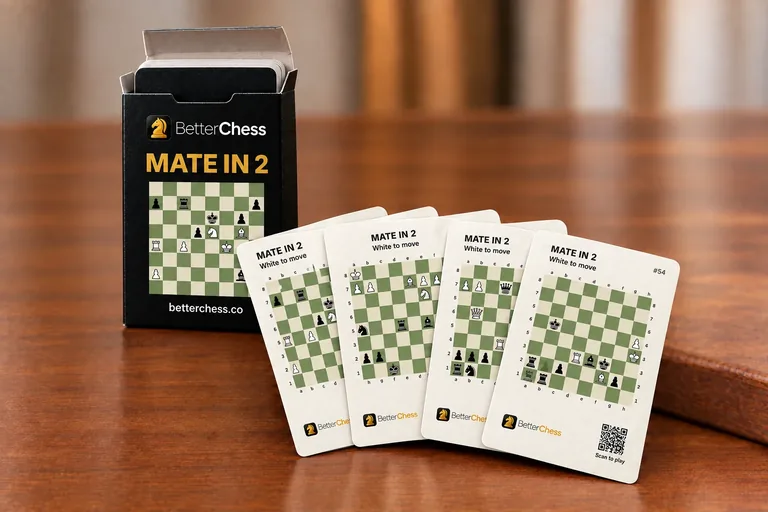
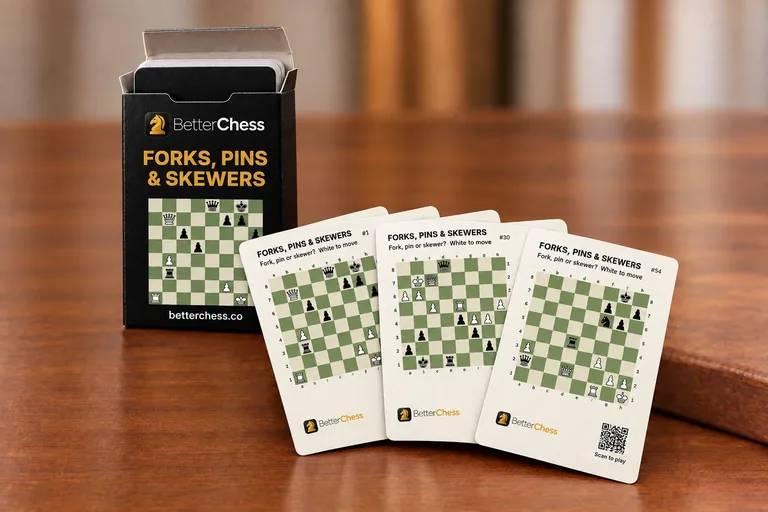
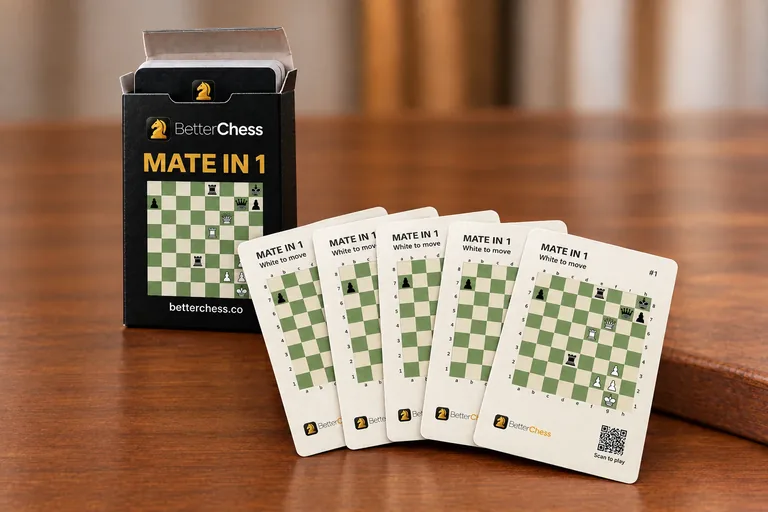
PRINTED CHESS PUZZLE CARDS
Chess puzzle playing card decks
54 poker-size cards in a tuck box. Puzzle on the front, solution on the back.