Compensation
Compensation is the non-material value, such as activity, structure, initiative, or king safety, that justifies being behind in material.
Material is only one currency in chess. When you are a pawn down but your pieces are more active, your opponent's king is weaker, or your structure dominates, you have compensation: assets that engines and strong players weigh against the missing material.
Every gambit is a claim of compensation. In the Benko Gambit, Black gives a real pawn for open a and b files, a monster bishop on the long diagonal, and pressure that lasts into the endgame. The pawn never returns, but the activity keeps paying rent.
Judging compensation is a core skill: ask how long the assets last. A fleeting lead in development must be converted quickly, while structural compensation, like a grip on a color complex or a crippled enemy majority, can be milked slowly. If your assets fade and the pawn remains, you are just worse.
Frequently asked
How do I know if I have enough compensation?
Check three things: piece activity compared to your opponent's, the safety of both kings, and how long your assets last. If you cannot point to a concrete, durable plus, the material will win out.
Is compensation the same as an attack?
No. An attack is one form of compensation, but structure, the bishop pair, a strong outpost, or the opponent's tangled pieces can all compensate for material without any direct threats to the king.
Related terms
BetterChess is a practice tool — we make no guarantee you'll reach 1800 or any rating. Definitions are standard chess terminology; every diagram position is checked legal with the same engine the board runs.
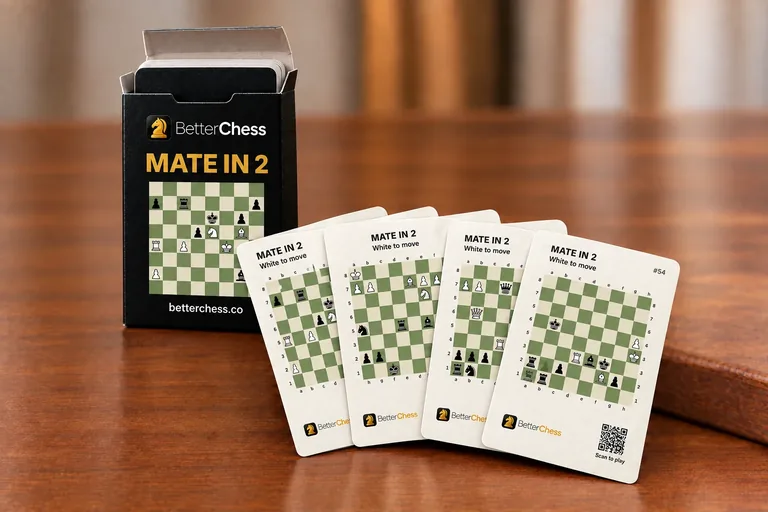
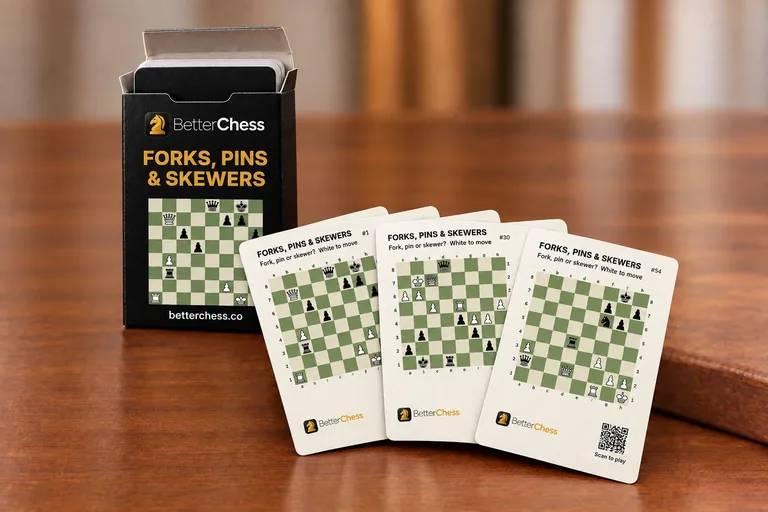
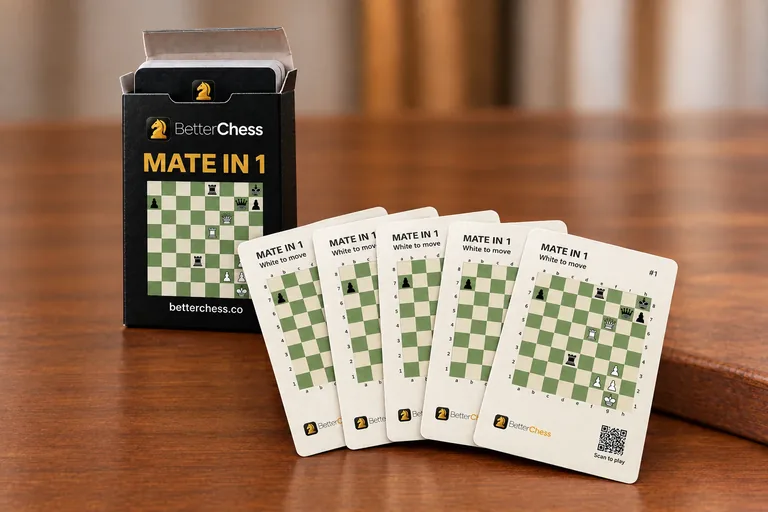
PRINTED CHESS PUZZLE CARDS
Chess puzzle playing card decks
54 poker-size cards in a tuck box. Puzzle on the front, solution on the back.