Brilliant Move
A brilliant move, marked with two exclamation points, is a spectacular and hard to see move, usually a sound sacrifice, that is also among the best in the position.
Annotators have long graded moves with symbols: one exclamation point for a strong move, two for a brilliant one, question marks for mistakes. A true brilliancy is not just flashy; it has to be correct, typically a sacrifice that gives up material for a concrete, calculable payoff.
Online game review automates the label. On the biggest chess site a move is generally marked brilliant when you found a good piece sacrifice that the engine confirms is best or close to it, which is why the icon is rare and why earning one feels so good.
The classic example is Frank Marshall's 23...Qg3 against Levitsky in 1912, placing the queen where three different units could capture it while every capture loses. Legend says spectators showered the board with gold coins; the story is probably embellished, but the move is completely sound.
Frequently asked
What makes game review mark a move brilliant?
Broadly, a sacrifice that is also one of the engine's top choices: you give up real material and the engine agrees the move is strong. The exact conditions vary by site and have been tuned over time.
Can a losing move be brilliant?
No. Brilliancy requires soundness: the sacrifice has to work against best defense. A spectacular queen offer that loses to the right reply is just a blunder with style.
Related terms
BetterChess is a practice tool — we make no guarantee you'll reach 1800 or any rating. Definitions are standard chess terminology; every diagram position is checked legal with the same engine the board runs.
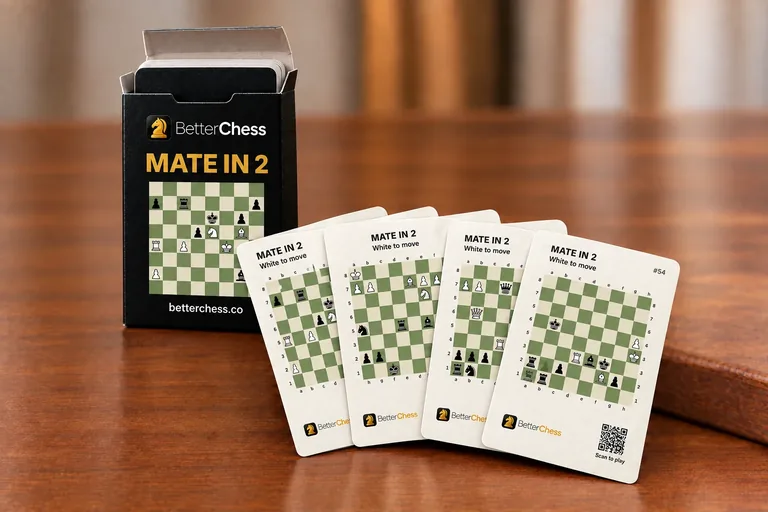
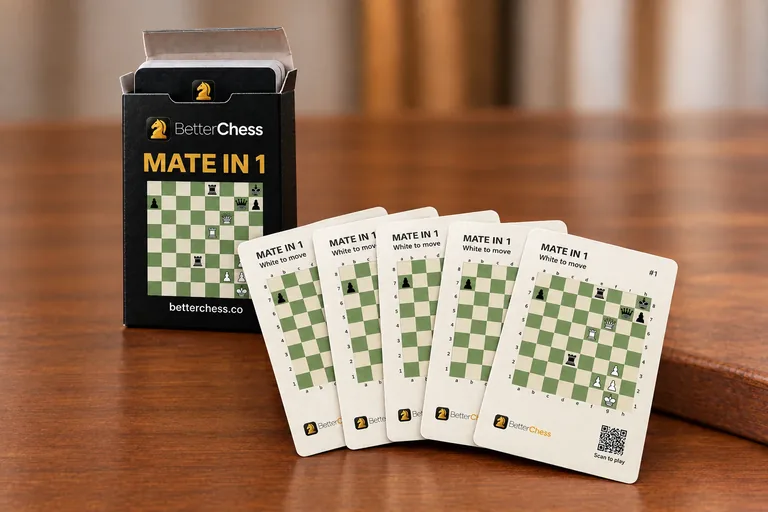
PRINTED CHESS PUZZLE CARDS
Chess puzzle playing card decks
54 poker-size cards in a tuck box. Puzzle on the front, solution on the back.