Torre Attack
Starting position
Engine ready — step through to see live evals.
Press ▶ Watch to play the line out, or Next to step through it — the engine evaluates every position.
The Torre Attack is a sound, low-theory system: White plays d4, Nf3 and Bg5, getting the queen's bishop out actively before e3 closes it in, then builds a solid centre with c3, Nbd2 and Bd3. It is named after Mexican master Carlos Torre, who used it to beat former world champion Emanuel Lasker in Moscow 1925 with the famous windmill combination.
The idea in one line
Develop with d4, Nf3 and Bg5, support the centre with e3 and c3, then castle and choose your break: e4 in the centre, or a knight to e5 with kingside play.
Key ideas
- Bg5 solves the London and Colle's biggest problem in one move: the queen's bishop develops actively before e3 shuts its diagonal.
- With ...e6 played, Bg5 pins the f6-knight against the queen, so Black usually spends time on ...Be7 or ...h6.
- Nbd2, c3 and Bd3 prepare the thematic e4 break, after which White's whole army springs to life.
- It is a system, not a forced line: the same setup works against ...e6, ...d5 and ...g6 defences with only small adjustments.
Plans for each side
White: Set up with Nf3, Bg5, e3, c3, Nbd2 and Bd3, castle short, then either push e4 to open the centre for your better-placed pieces or plant a knight on e5 and expand on the kingside.
Black: Develop calmly with ...Be7 and ...O-O, hit the centre with ...c5, and consider the critical ...Qb6, hitting the b2-pawn the g5-bishop left behind, or ...h6 and ...b6 setups to blunt White's pieces.
Common mistakes to avoid
- The b2-pawn is the system's soft spot: once the bishop goes to g5, an early ...Qb6 hits it, so have a prepared answer rather than improvising.
- Move order matters: play Bg5 before e3, otherwise the bishop is locked in and the system loses its main selling point.
- Black's ...h6 and ...Ne4 ideas harass the g5-bishop; know your retreat squares so it never gets trapped or swapped off for nothing.
The main line, explained
3. Bg5Bg5, the Torre move: the bishop develops actively before e3 shuts the door, and pins the f6-knight against the queen.
3… c5...c5 is Black's principled strike at d4.
4. e3e3 supports d4 and frees the f1-bishop; the solid Torre centre takes shape.
4… Be7...Be7 breaks the pin and prepares castling, Black's most natural setup.
5. Nbd2Nbd2 supports a future e4 break; the c-pawn will go to c3, so this knight belongs on d2.
5… O-O...O-O completes development. A normal, healthy middlegame lies ahead, where plans beat memorized lines.
Frequently asked
Is the Torre Attack good for club players?
Yes, it is one of the best system openings: sound structure, an active bishop, clear plans and very little theory. You spend your study time on middlegame ideas instead of memorizing forced variations.
Torre Attack vs London System: what is the difference?
Both are d4 systems with an early bishop development. The London puts the bishop on f4; the Torre puts it on g5, where it pressures the f6-knight and often makes Black spend time on ...h6 or ...Be7. Structures and plans are otherwise similar.
What is the most famous Torre Attack game?
Carlos Torre against Emanuel Lasker, Moscow 1925. Torre unleashed the windmill: a series of discovered checks with rook and bishop that won material and made the opening's name.
More openings to explore
London System
Queen's Pawn (1.d4) · D02
Learn & play ›Trompowsky Attack
Queen's Pawn (1.d4) · A45
Learn & play ›Knowing the moves of the Torre Attack is not the same as knowing why they work. Use Claude? BetterChess gives it a real engine, so it explains this opening from the board in front of you instead of from memory.
BetterChess is a practice tool — we make no guarantee you'll reach 1800 or any rating. The lines here are standard, well-established opening theory, and every move is checked legal with the same engine the board runs.
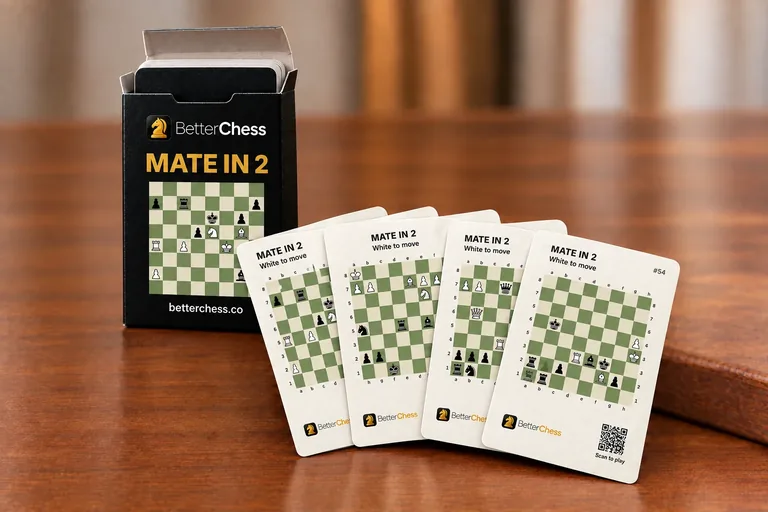
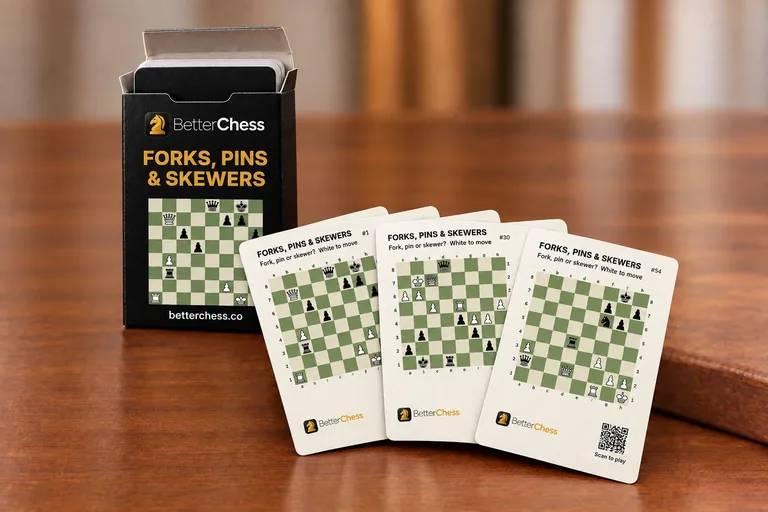
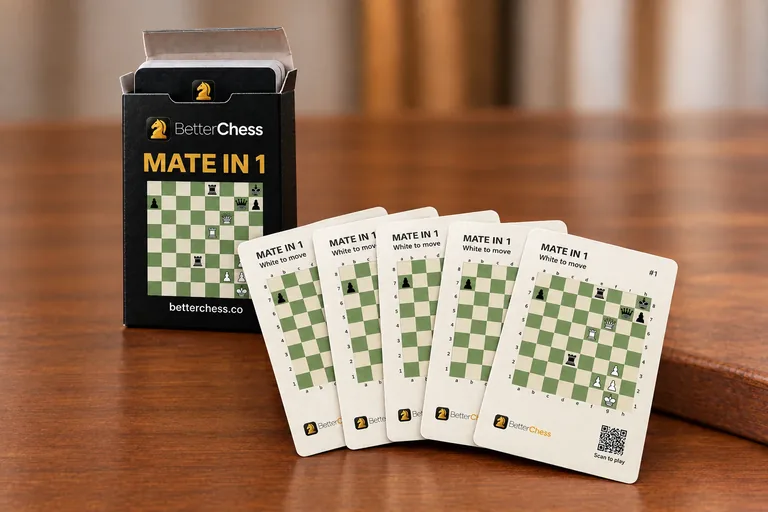
PRINTED CHESS PUZZLE CARDS
Chess puzzle playing card decks
54 poker-size cards in a tuck box. Puzzle on the front, solution on the back.