Theoretical Draw
A theoretical draw is a position whose objective result, with best play from both sides, is known to be a draw.
Commentators say a position is a theoretical draw when established analysis, or nowadays an endgame tablebase, proves that neither side can force a win against correct defense. It is a statement about the position, not the players: the evaluation assumes best play from both sides.
The endgame canon is full of them: the Philidor position in rook endgames, king and rook pawn against a king that reaches the corner, wrong rook pawn with bishop, queen against a bishop or rook pawn on the seventh with the attacking king far away, and many opposite-colored bishop fortresses. Recognizing these saves you from trading into lost causes and tells you which inferior endings are safely holdable.
The crucial caveat: theoretical means provable, not automatic. A theoretical draw still has to be held move by move over the board, and one careless king step can turn a book draw into a loss. Strong players steer bad positions toward known drawn structures precisely because the defensive method there is documented and learnable.
Frequently asked
Who decides that a position is a theoretical draw?
For endgames with up to seven pieces, computer tablebases have proved the result of every legal position, so the verdict is mathematical fact. For larger positions the label rests on established analysis showing a reliable defensive method against every winning try.
If it is a theoretical draw, can I relax?
No. The evaluation assumes best play, and the defender usually has exactly one holding method. Learn the standard techniques, like the Philidor defense or corner defenses against rook pawns, so the theory works for you under the clock.
Related terms
BetterChess is a practice tool — we make no guarantee you'll reach 1800 or any rating. Definitions are standard chess terminology; every diagram position is checked legal with the same engine the board runs.
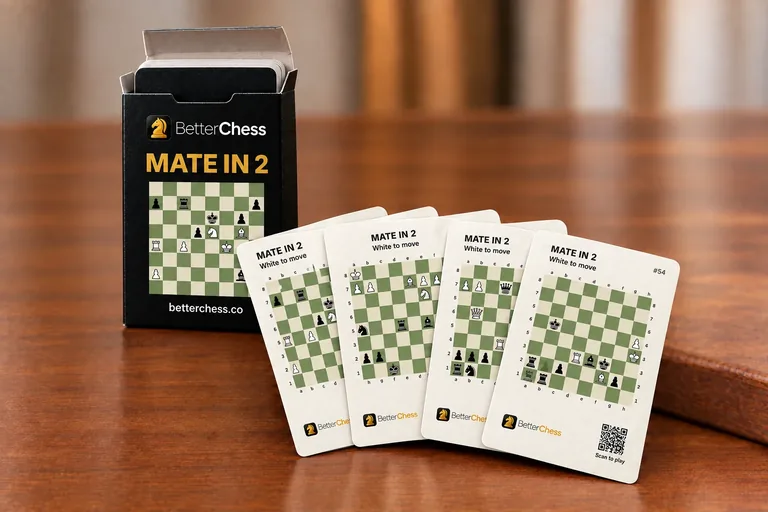
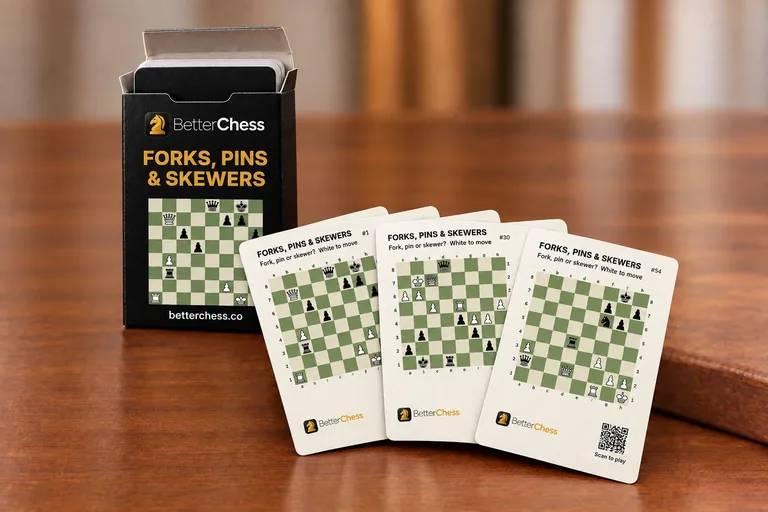
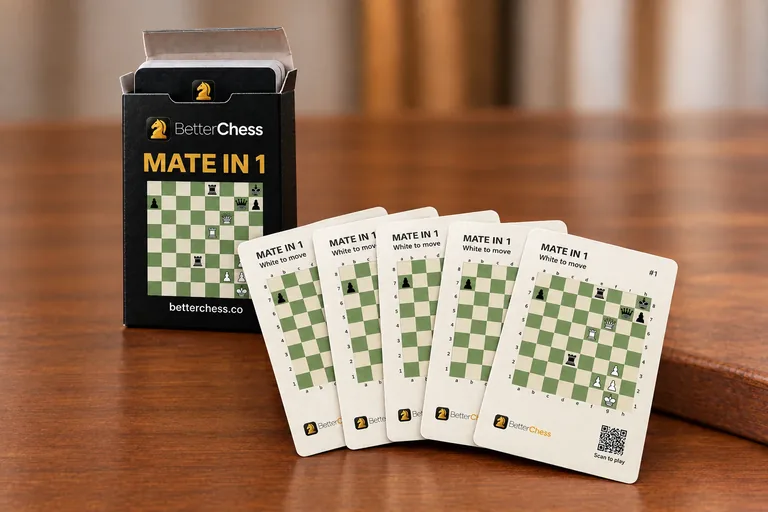
PRINTED CHESS PUZZLE CARDS
Chess puzzle playing card decks
54 poker-size cards in a tuck box. Puzzle on the front, solution on the back.