Tempo
A tempo is a single move counted as a unit of time — you ‘gain a tempo’ when you make a useful move while forcing the opponent to make a useless one.
Chess is partly a race to develop your pieces and act first, and a tempo is the basic unit you measure that race in: one move, one tempo. The plural is ‘tempi’.
You gain a tempo when you improve your position and at the same time force the opponent to waste a move — for instance, developing a piece with a threat so they have to react instead of building their own game.
You lose a tempo when you move the same piece twice for no reason, or get a piece chased around. In the opening especially, a tempo or two can be the difference between a smooth game and a cramped one.
Frequently asked
What does ‘a tempo up’ mean?
It means you’re effectively one useful move ahead of where you’d otherwise be — your pieces are a move further along than the opponent’s, which usually means more activity.
How do you gain a tempo?
Most often by making a threat as you develop: if your move forces the opponent to defend, they spend a move reacting while you keep building.
Related terms
BetterChess is a practice tool — we make no guarantee you'll reach 1800 or any rating. Definitions are standard chess terminology; every diagram position is checked legal with the same engine the board runs.
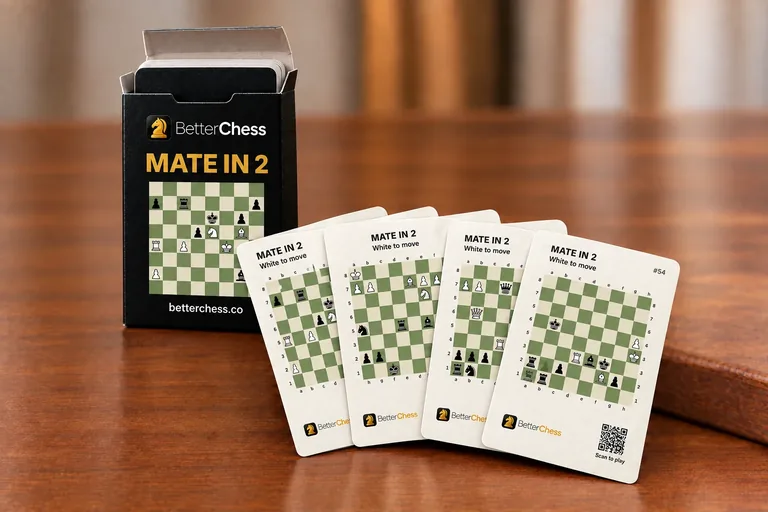
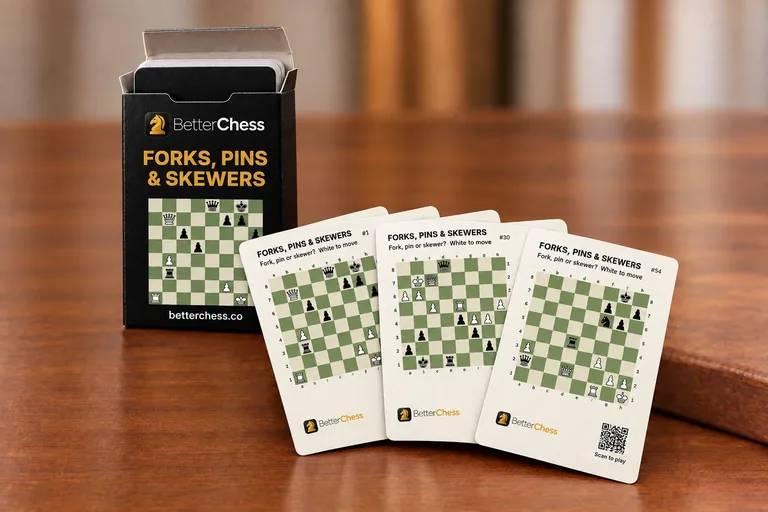
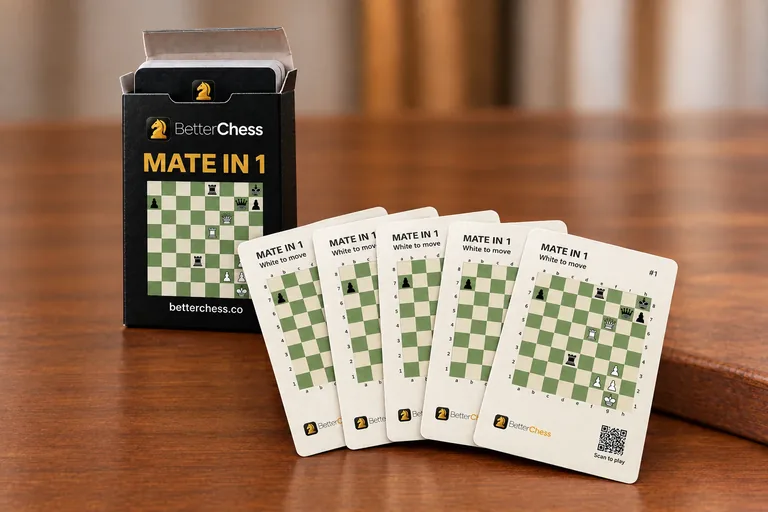
PRINTED CHESS PUZZLE CARDS
Chess puzzle playing card decks
54 poker-size cards in a tuck box. Puzzle on the front, solution on the back.