Piece Coordination
Piece coordination means your pieces defend each other and aim at the same targets, multiplying their strength instead of working alone.
A queen alone rarely mates anyone; a queen supported by a bishop battery, a knight on the rim of the king's shelter, and a rook ready to lift is another story. Coordination is the difference between five pieces and one five-piece army: attacks succeed when the attackers arrive together.
Coordinated pieces also cover each other's weaknesses. Loose, scattered pieces are the raw material of tactics: forks and double attacks punish armies where nobody defends anybody. A useful habit borrowed from strong players: after every candidate move, ask what the move does for the rest of your pieces.
Build coordination deliberately: point your pieces at a common target, avoid blocking your own lines, and reroute the one piece that is out of play before starting operations. One badly placed piece is usually enough to make a whole position bad.
Frequently asked
How do I improve my piece coordination?
Pick a target and point pieces at it, keep pieces defending each other, and find your worst-placed piece and improve it. Harmony around one plan beats scattered activity around three.
Why do coordinated pieces beat material?
Because chess is won by force applied at one point. Three coordinated attackers around a king outfight five scattered defenders, which is why sound sacrifices work: the material that matters is the material in the fight.
Related terms
BetterChess is a practice tool — we make no guarantee you'll reach 1800 or any rating. Definitions are standard chess terminology; every diagram position is checked legal with the same engine the board runs.
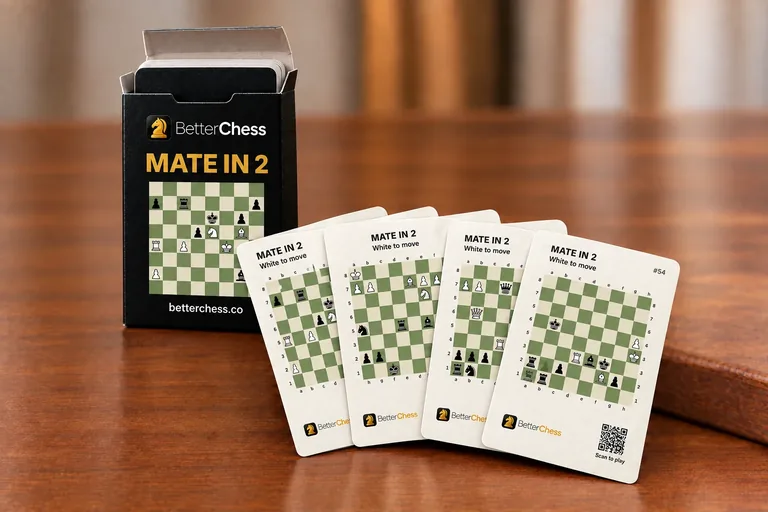
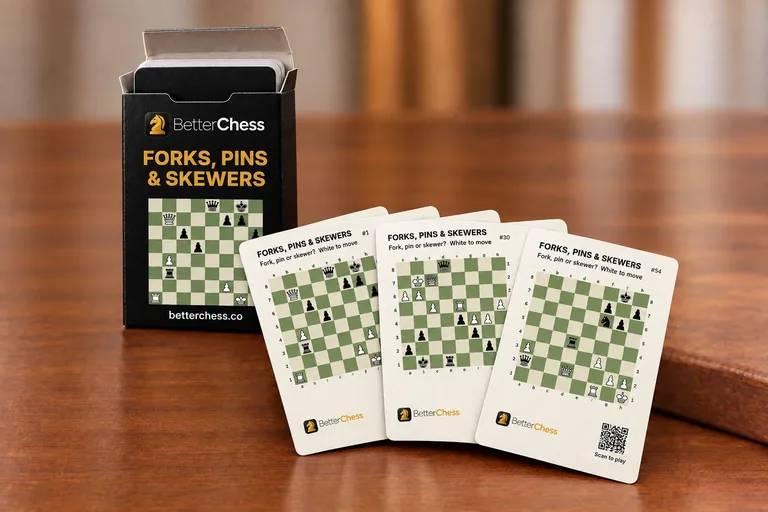
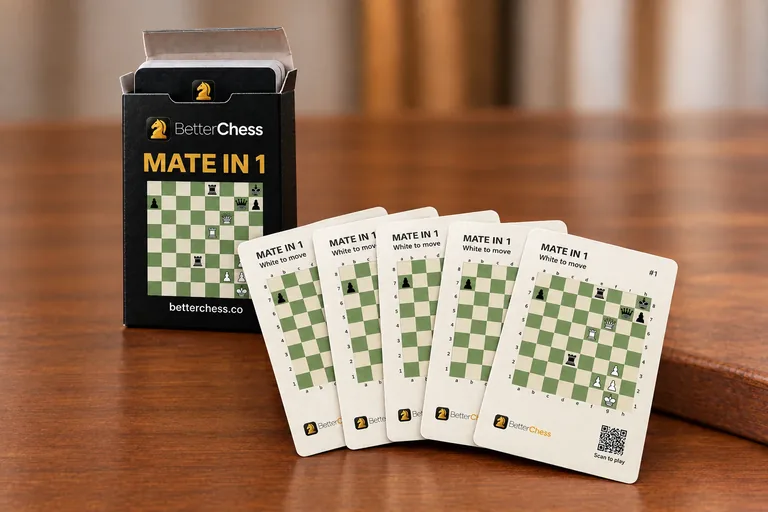
PRINTED CHESS PUZZLE CARDS
Chess puzzle playing card decks
54 poker-size cards in a tuck box. Puzzle on the front, solution on the back.