Pawn Tension
Pawn tension exists when pawns attack each other and both sides choose not to capture, keeping the structure flexible and the options open.
When two pawns can take each other, three things can happen: you capture, the opponent captures, or the tension stays. Keeping the tension is often strongest, because whoever captures first usually concedes something: a file, a central square, or a tempo.
The Queen's Gambit is the classic example. After 1.d4 d5 2.c4, the c4 and d5 pawns eye each other for many moves. If Black releases the tension with ...dxc4 too early, White gains the center; if White plays cxd5 without a concrete reason, Black recaptures and frees the c8 bishop's diagonal or gets a solid structure.
Club players tend to resolve tension out of discomfort. Train the opposite reflex: ask what each capture gives away, and hold the tension until a capture wins something concrete or your opponent is forced to resolve it on your terms.
Frequently asked
When should I release pawn tension?
When the capture achieves something concrete: opening a file for your rook, damaging the enemy structure, or winning a tempo. If a capture helps your opponent develop or recapture toward the center, keep waiting.
Why is capturing first often bad?
The side that captures usually lets the opponent recapture toward the center or open a line for their pieces. By resolving the tension you also give up the option of resolving it later on better terms.
Related terms
BetterChess is a practice tool — we make no guarantee you'll reach 1800 or any rating. Definitions are standard chess terminology; every diagram position is checked legal with the same engine the board runs.
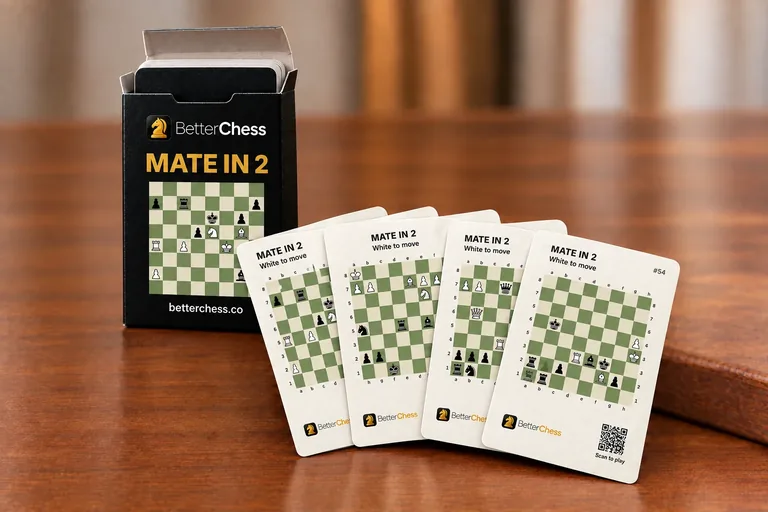
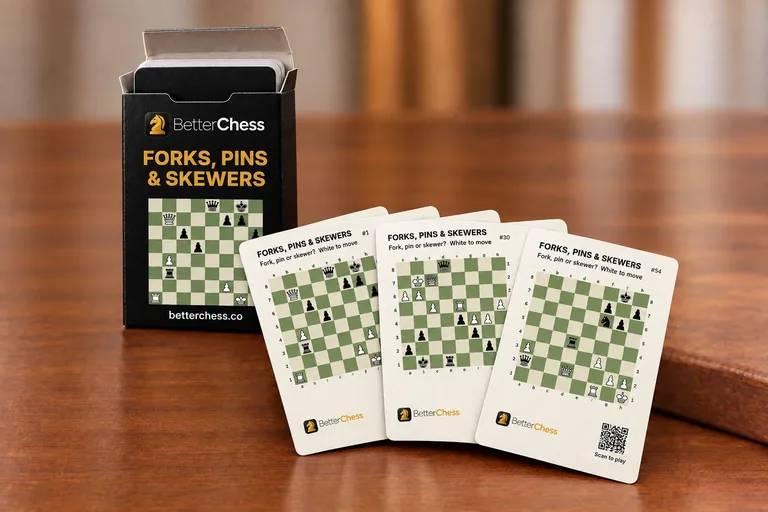
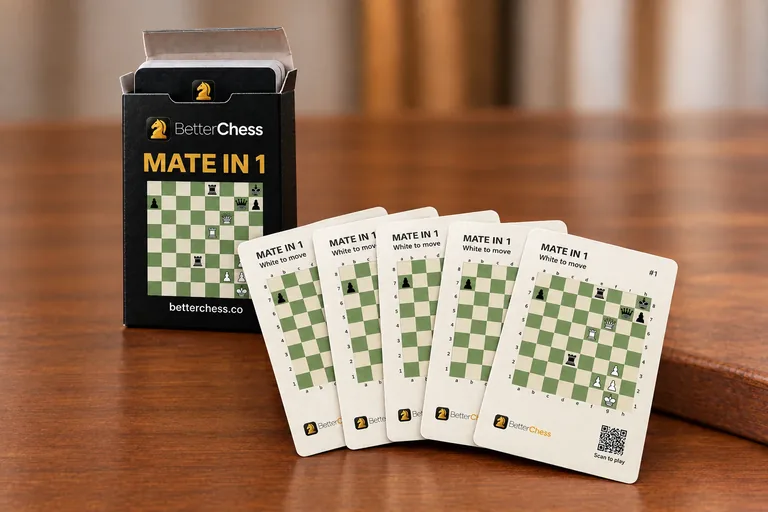
PRINTED CHESS PUZZLE CARDS
Chess puzzle playing card decks
54 poker-size cards in a tuck box. Puzzle on the front, solution on the back.