Outside Passed Pawn
An outside passed pawn is a passed pawn far away from the rest of the pawns, and its advance forces the defending king to abandon the main battlefield.
A passed pawn is strong; a passed pawn far from everything else is often decisive. Because it sits on the edge of the board, away from both kings' natural posts, someone has to make a long journey to deal with it, and that someone is usually the defending king.
The winning mechanism is a decoy. You push the outside passer, the enemy king is forced to chase it down, and while it is away your own king invades on the other wing and eats the abandoned pawns. You often give the passer up cheerfully: it has done its job by dragging the king out of position.
This is why endgame books tell you to value the outside passer when trading into a king and pawn endgame. If you are the one who will own the distant passed pawn, simplification favors you; if your opponent will own it, keep pieces on and fight in the middlegame instead.
Frequently asked
Why is an outside passed pawn better than a central one in king endgames?
Because of geometry. The defending king must travel a long way to stop it, leaving the rest of its pawns undefended. A central passer is easier for the king to blockade while staying in touch with everything else.
Should I rush to push my outside passed pawn?
Usually yes, in a pure king endgame: push it far enough to force the enemy king to commit, then switch your king to the other wing. Count the tempi first so you know your king arrives before the defender can get back.
Related terms
BetterChess is a practice tool — we make no guarantee you'll reach 1800 or any rating. Definitions are standard chess terminology; every diagram position is checked legal with the same engine the board runs.
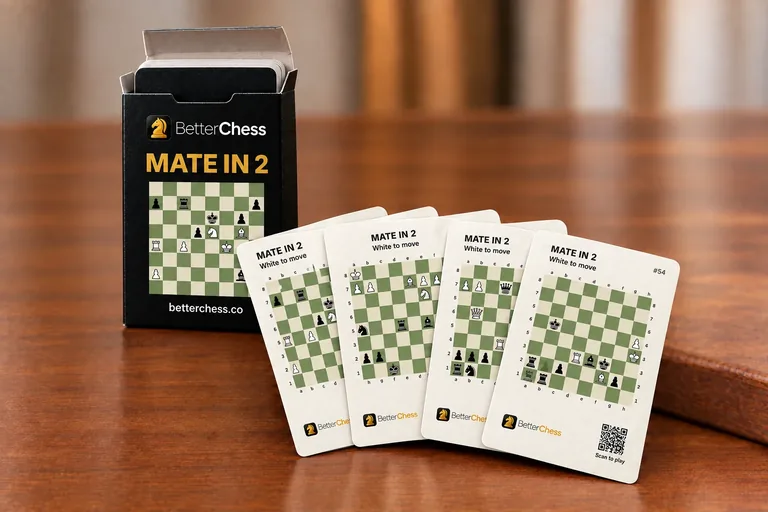
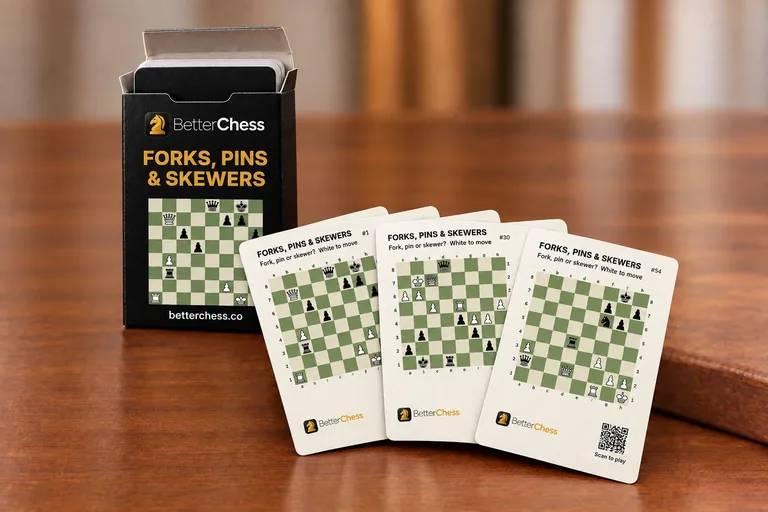
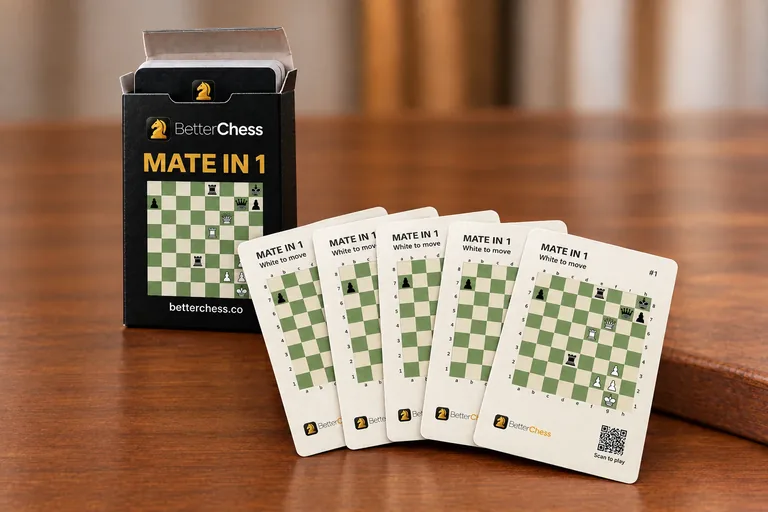
PRINTED CHESS PUZZLE CARDS
Chess puzzle playing card decks
54 poker-size cards in a tuck box. Puzzle on the front, solution on the back.