Opening Repertoire
An opening repertoire is a player's prepared, connected set of openings: what you play as White and how you answer each of the opponent's main choices as Black.
A repertoire turns the opening from improvisation into policy. As White you choose a first move and a prepared reply to each major defense; as Black you decide in advance how you meet 1.e4, 1.d4 and the flank openings. The point is that the first ten moves of your games become familiar territory you have studied, not fresh problems.
Build it narrow and coherent. Pick one weapon against each major system, favor openings whose middlegames suit your style, whether sharp attacks or quiet maneuvering, and prefer lines whose ideas you understand over lines with the best engine verdict. At club level a compact repertoire of well-understood systems beats a wide one of half-learned theory every time.
A repertoire is a living document. After every serious game, check where you left your preparation and why, patch the holes, and note the plans that worked. Expand gradually, adding a second weapon only when the first is solid, and let your repertoire grow with your rating rather than ahead of it.
Frequently asked
How many openings do I need in my repertoire?
Fewer than you think: one system as White against each major defense, one defense to 1.e4 and one to 1.d4 as Black, plus a plan against the common flank openings. Depth of understanding in a few systems beats shallow coverage of many.
Should I copy a grandmaster's repertoire?
Borrow the structure, not the whole thing. Top repertoires assume enormous memory and preparation time. Choose openings that produce middlegames you enjoy and understand, then use master games in those lines as your study material.
Related terms
BetterChess is a practice tool — we make no guarantee you'll reach 1800 or any rating. Definitions are standard chess terminology; every diagram position is checked legal with the same engine the board runs.
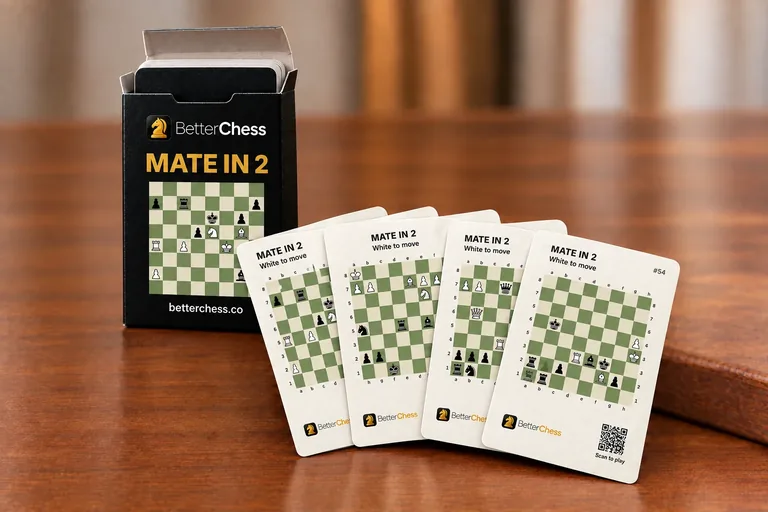
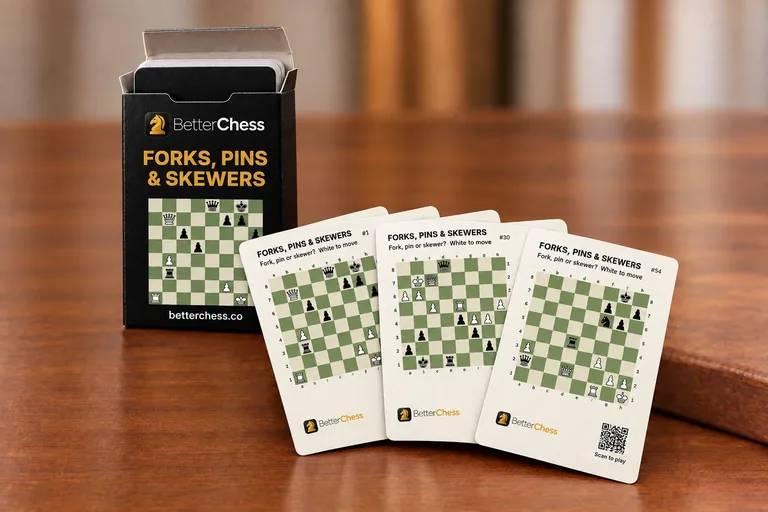
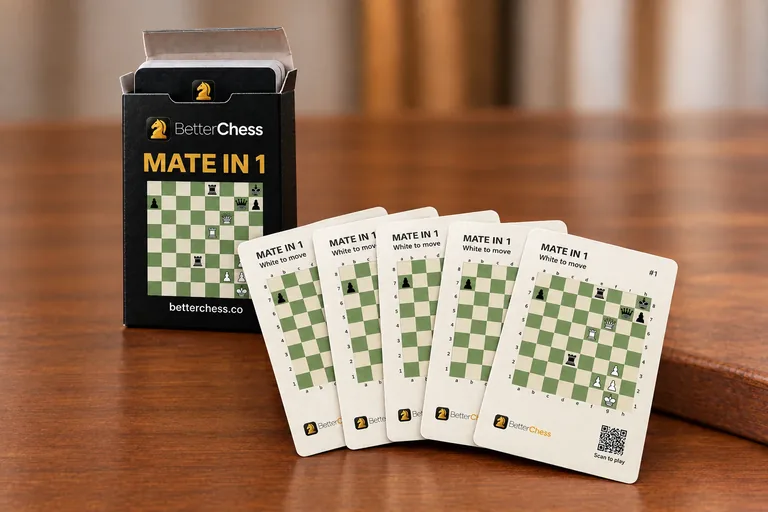
PRINTED CHESS PUZZLE CARDS
Chess puzzle playing card decks
54 poker-size cards in a tuck box. Puzzle on the front, solution on the back.