Hedgehog System
The Hedgehog is a setup where Black places pawns on a6, b6, d6, and e6 behind a White c4 and e4 bind, staying compact and waiting to strike with ...b5 or ...d5.
The Hedgehog looks passive and is anything but. Black voluntarily accepts a cramped camp on the first three ranks: pawns on a6, b6, d6, e6, bishops on b7 and e7, queen on c7, knights on d7 and f6, rooks behind the coming breaks. Every spine points outward.
The system rose to fame in the 1970s and 1980s, with Ulf Andersson and Garry Kasparov its most celebrated practitioners, arising from the English Opening and several Sicilian move orders. White owns more space, but must watch both ...b5 and ...d5 forever; one careless piece placement and the position explodes in Black's favor.
Plans are remarkably clear for such a rich position. Black shuffles pieces to ideal squares and prepares the breaks; White tries to attack on the kingside or clamp the queenside without loosening anything. Understanding beats memorization here, which is why the Hedgehog is a favorite of positional players at every level.
Frequently asked
Why is it called the Hedgehog?
Because Black curls up behind a row of little pawns on the sixth rank like a hedgehog rolling into a ball: harmless looking, painful to touch. Careless White moves get punished by the sudden ...b5 or ...d5 spikes.
Is the Hedgehog passive?
Only in appearance. Black concedes space but keeps a flexible, weakness-free camp and two permanent pawn breaks. Many model games show White drifting for ten moves and then losing in three.
Related terms
BetterChess is a practice tool — we make no guarantee you'll reach 1800 or any rating. Definitions are standard chess terminology; every diagram position is checked legal with the same engine the board runs.
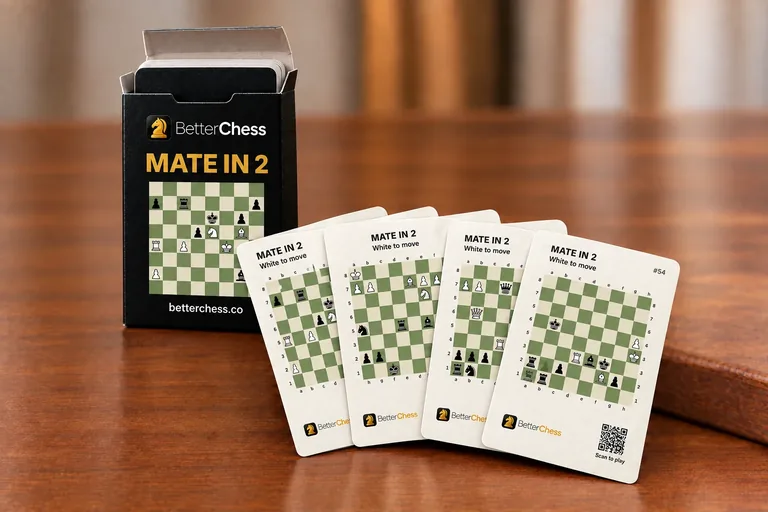
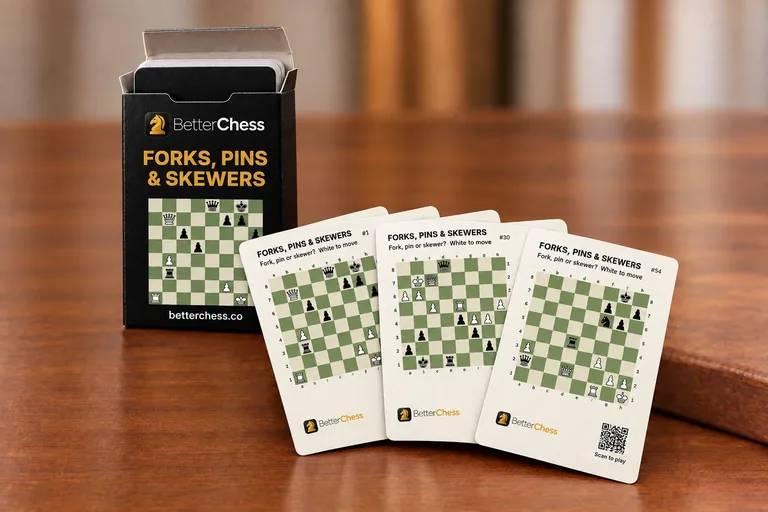
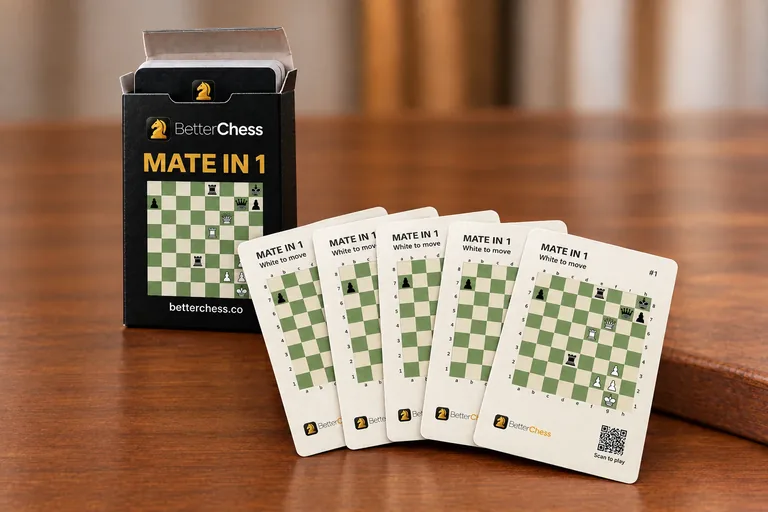
PRINTED CHESS PUZZLE CARDS
Chess puzzle playing card decks
54 poker-size cards in a tuck box. Puzzle on the front, solution on the back.