Connected Rooks
Rooks are connected when they stand on the same rank with no pieces between them, so each defends the other, usually on the first rank after development.
Connecting the rooks is the traditional finish line of opening development: minor pieces out, king castled, queen off the back rank. Once the rooks see each other, neither can be picked off by a back-rank tactic on its own, and both are ready to swing to whichever file opens.
Connected rooks are about flexibility and safety rather than direct attack. Loose rooks in the corners are classic tactical targets for queen forks and skewers; connected, they cover each other and the back rank while you decide where they belong.
The practical rule: do not start a fight while a rook still sleeps on its original square undefended. And once connected, place them purposefully, behind your pawn breaks and on files that are open or about to open.
Frequently asked
Why is connecting the rooks considered the end of development?
Because it requires everything else to be done: minor pieces developed, king castled, queen moved off the first rank. From there the middlegame begins and the rooks head for open files.
Are connected rooks the same as doubled rooks?
No. Connected rooks stand side by side on a rank guarding each other, usually the first rank. Doubled rooks are stacked on the same file (or rank) to combine their attacking power on one line.
Related terms
BetterChess is a practice tool — we make no guarantee you'll reach 1800 or any rating. Definitions are standard chess terminology; every diagram position is checked legal with the same engine the board runs.
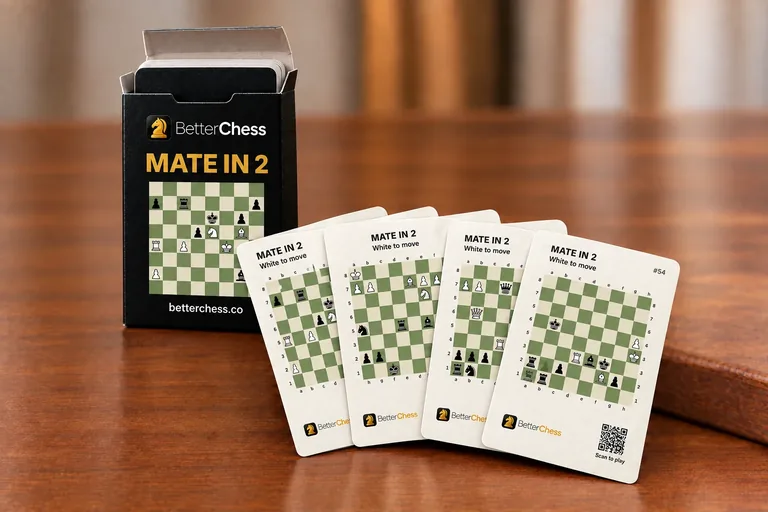
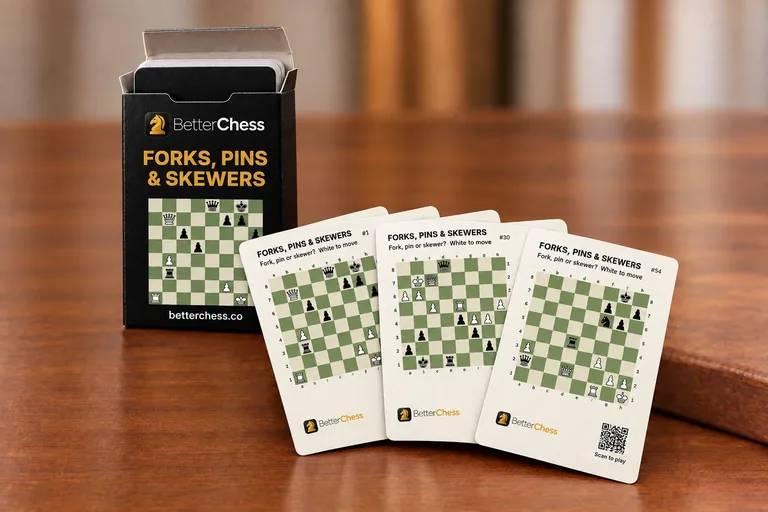
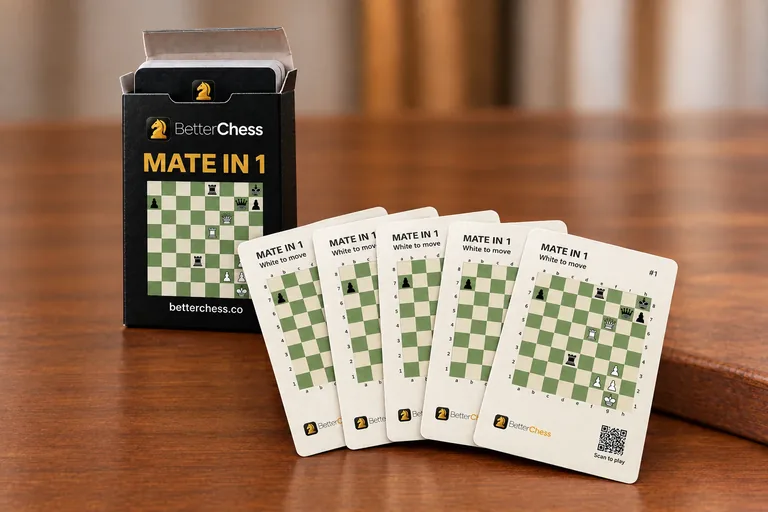
PRINTED CHESS PUZZLE CARDS
Chess puzzle playing card decks
54 poker-size cards in a tuck box. Puzzle on the front, solution on the back.