Check
Check is when your king is under direct attack, and you must answer it immediately on your next move.
A king is in check when an enemy piece attacks the square it stands on. Because you can never leave your own king under attack, dealing with check takes priority over everything else.
There are only three ways to answer a check: move the king to a safe square, block the line with another piece, or capture the checking piece. If none of those is possible, it isn't just check — it's checkmate.
Check is written with a ‘+’ after the move (for example Re8+). It isn't a goal in itself — a check that the opponent simply waves away can lose you a tempo — but checks that gain material or force the king into the open are powerful tools.
Frequently asked
What are the three ways to get out of check?
Move the king to a safe square, block the checking line with another piece, or capture the piece giving check. If you can do none of these, it's checkmate.
Do you have to say ‘check’?
No. Announcing check is a casual courtesy, not a rule — in tournament play you simply make a legal move that answers the check.
Related terms
BetterChess is a practice tool — we make no guarantee you'll reach 1800 or any rating. Definitions are standard chess terminology; every diagram position is checked legal with the same engine the board runs.
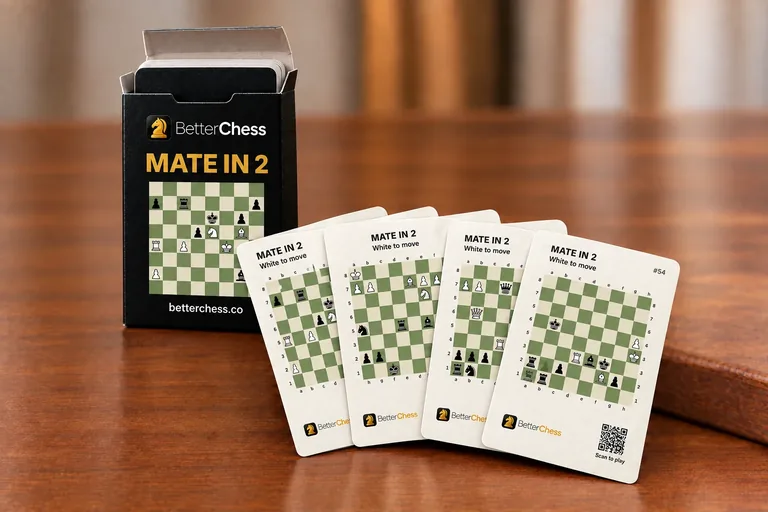
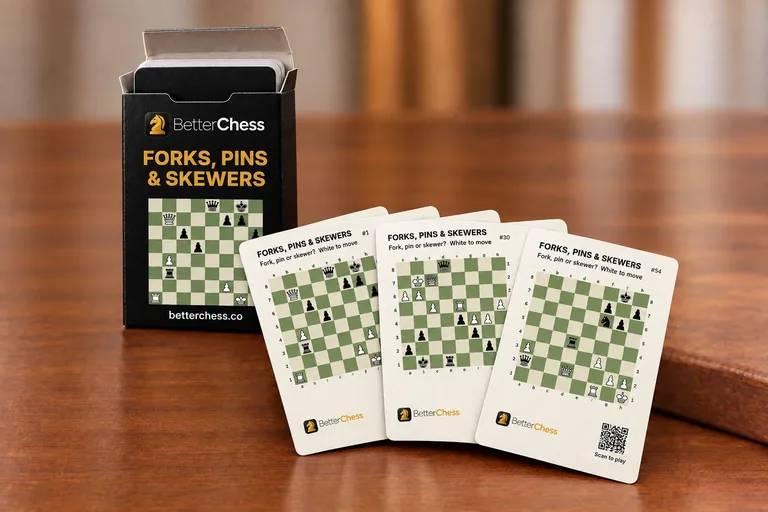
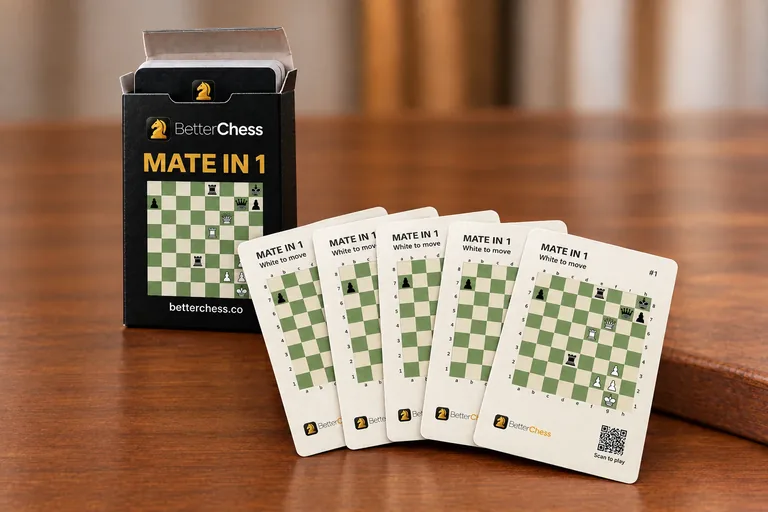
PRINTED CHESS PUZZLE CARDS
Chess puzzle playing card decks
54 poker-size cards in a tuck box. Puzzle on the front, solution on the back.