Bare King
A bare king is a side that has nothing left on the board except the king itself.
Once you are down to a bare king you cannot win the game by any means: you have no material to give checkmate with, and under modern rules you cannot even win on time, since a win requires that a mate was at least possible. If your opponent oversteps the clock against your bare king, the game is a draw.
The bare king can still save half a point. Stalemate remains fully available, and if the opponent's remaining force is insufficient (a lone bishop or lone knight, or nothing at all), the game is immediately drawn. King versus king is the simplest dead position in chess.
Historically this was different: in shatranj, the medieval ancestor of chess, baring the enemy king was itself a way to win. Modern chess dropped that rule, so today the stronger side must actually deliver mate, and standard technique with king and queen or king and rook finishes the job in a handful of moves.
Frequently asked
Can a bare king win on time?
No. Modern rules award a draw when the player who ran out of time could not have been checkmated by any legal sequence of moves. Against a bare king no mate is possible, so the flag fall scores only half a point for the defender.
Is king versus king an automatic draw?
Yes. With only the two kings left no checkmate can ever occur, so the position is dead and the game is drawn immediately, whatever the clocks say.
Related terms
BetterChess is a practice tool — we make no guarantee you'll reach 1800 or any rating. Definitions are standard chess terminology; every diagram position is checked legal with the same engine the board runs.
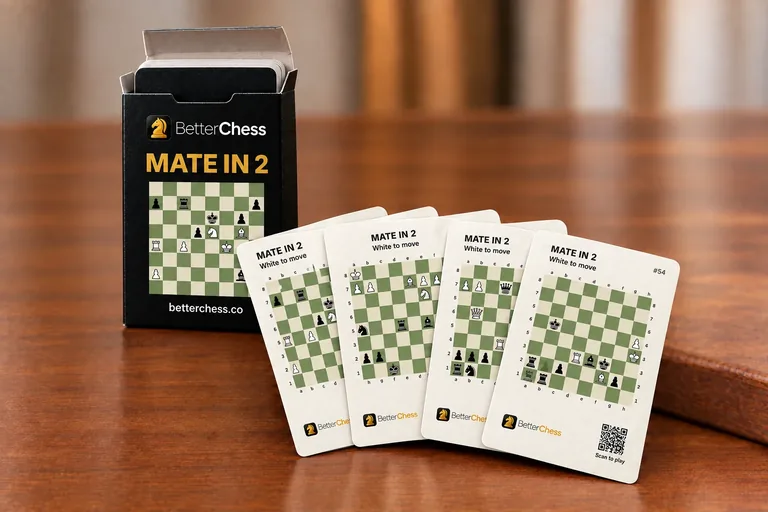
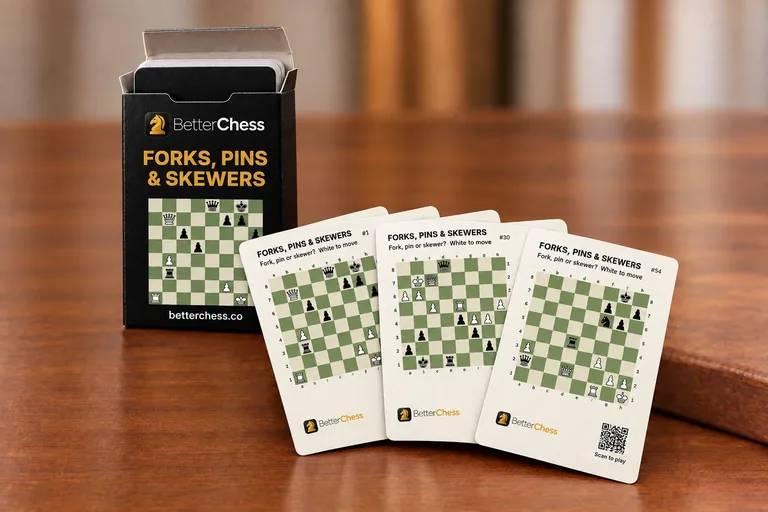
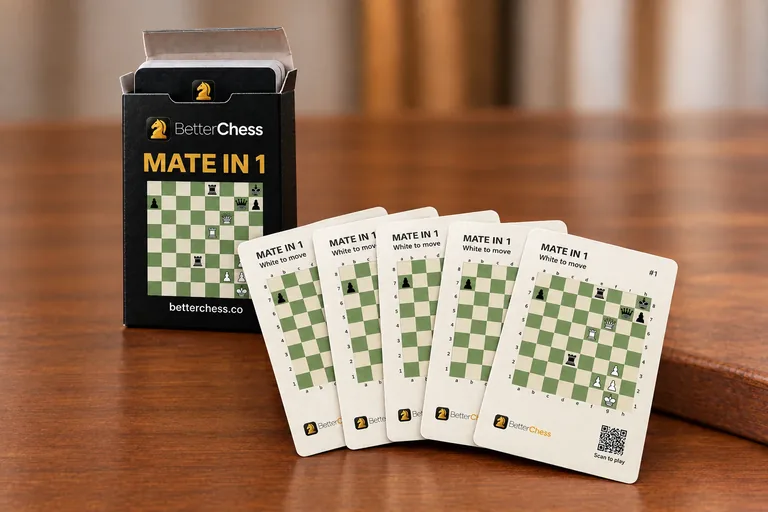
PRINTED CHESS PUZZLE CARDS
Chess puzzle playing card decks
54 poker-size cards in a tuck box. Puzzle on the front, solution on the back.