Attraction
Attraction is a tactic, usually a sacrifice, that forces an enemy piece or king onto a specific square where a follow-up blow wins the game or decisive material.
Some squares are poisoned: a king or piece standing there walks into a fork, a discovered attack or a mating net. Attraction is the art of forcing an enemy unit onto exactly such a square, most often by offering material it must or feels compelled to take.
The textbook example is the smothered mate finish: the queen sacrifices herself on g8, the rook is attracted onto that square when it captures, and the knight mates on f7 against a king now completely buried by its own pieces. The queen's only job was to drag the rook one square.
Attraction combines naturally with other motifs: attract the king onto a square, then fork it; attract a defender onto a line, then pin it. When you calculate sacrifices, always ask what changes about the capturing piece's new square. If the answer is a knight check or a mate, the material was never really offered.
Frequently asked
What is the difference between attraction and a decoy?
They are near synonyms and many books use them interchangeably. Both lure an enemy piece onto a bad square; attraction is most often used for sacrifices that drag the king or a key defender onto the exact square the combination needs.
How do I spot attraction sacrifices in my games?
Work backwards from the blow you wish you had: a knight fork, a mating square, a skewer. If it only fails because an enemy piece is one square away from the wrong place, look for a forcing sacrifice that pulls it there.
Related terms
BetterChess is a practice tool — we make no guarantee you'll reach 1800 or any rating. Definitions are standard chess terminology; every diagram position is checked legal with the same engine the board runs.
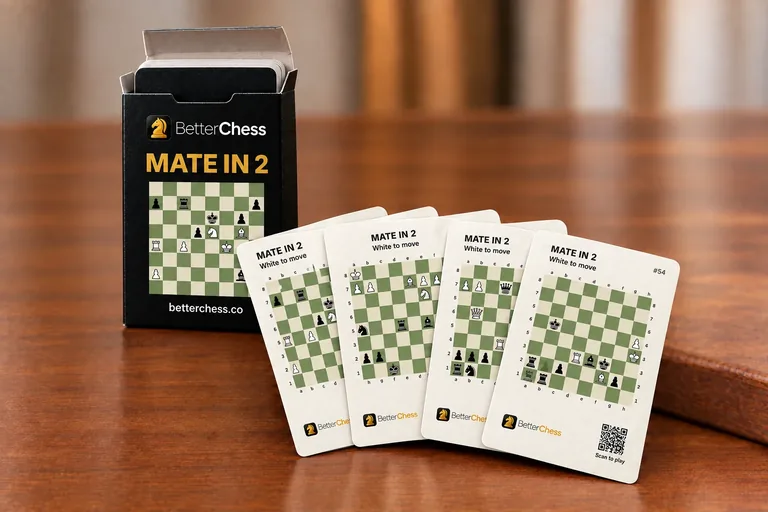
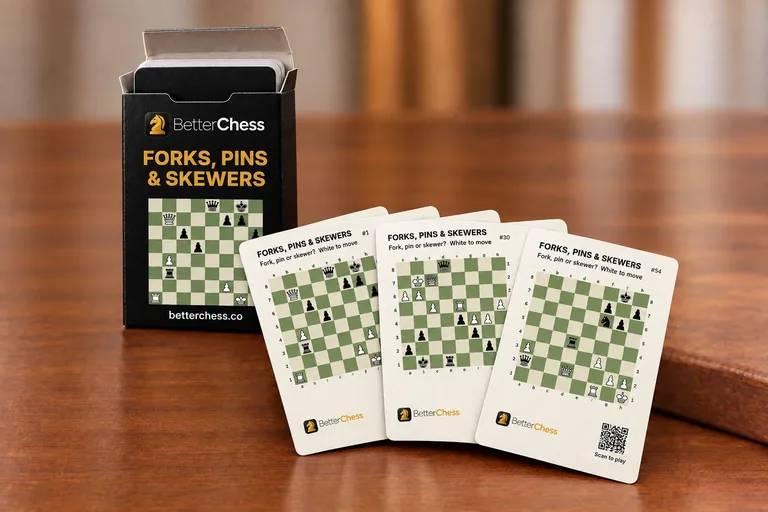
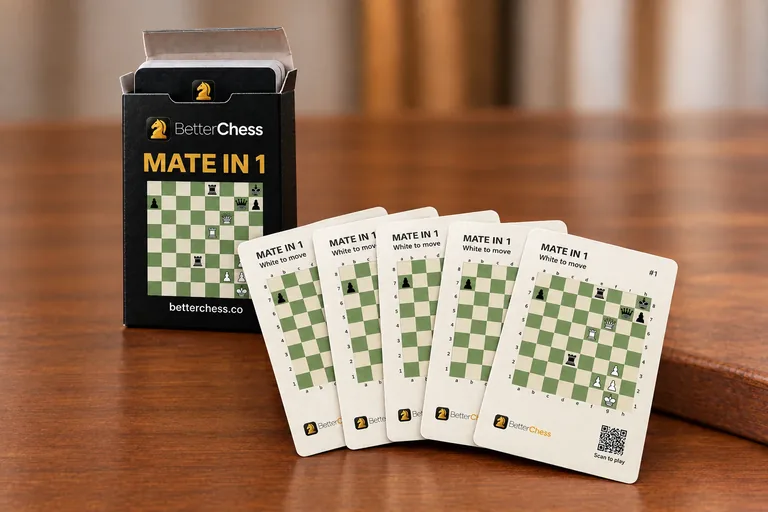
PRINTED CHESS PUZZLE CARDS
Chess puzzle playing card decks
54 poker-size cards in a tuck box. Puzzle on the front, solution on the back.