Is 2100 a good chess rating?
Short answer. A 2100 online rapid rating is better than roughly 99% of all rated accounts — that's expert territory. Below is what a 2100 player typically does well, what holds them back, and the single most useful thing to work on next.
2100 Rapid places you well inside the top 1% of rated accounts online — a genuinely strong player by any amateur standard. A 2100 player combines fast accurate tactics, deep strategic understanding, well-prepared openings, and reliable conversion of small edges. Almost every game against the wider pool is a comfortable win; the real tests come only from peers.
At 2100 the path forward is essentially the path to mastery: near-flawless calculation in complications, a repertoire deep enough to generate pressure against strong defenders, and the consistency to avoid even small inaccuracies across a long game. The work is fine-grained and demanding, and improvement requires real study discipline rather than just playing more.
Analyze your own games without an engine first, then with one, to find the precise moments your judgment diverged from best play — at 2100, honest self-analysis of those gaps is the main engine of further growth.
Concepts to learn at this level
Check another rating
2100 in online rapid: better than ~99.3% of rated players.
That's elite, master-level territory — a tiny fraction of a percent of players reach it. Tier: Master-level.
Where 2100 sits on the online rapid rating distribution. Taller bars are more crowded rating bands.
Knowing your number is step one. The faster way up is seeing the exact move that's costing you games.
See the move that's costing you games — review a game freeSource: Rapid rating distribution (www.chess.com), retrieved 2026-06-17. Percentiles are approximate and drift over time as the player pool grows.
Nearby rating bands
Want the full ladder? The chess rating percentile hub lays out every band from 400 to 2200 with where each one lands on the distribution, plus a checker for any rating in between.
The fastest way to climb past 2100
Your rating won't move because you read about it — it moves when you stop repeating the mistake that keeps costing you games. The quickest way to find that mistake is to look at a game you lost: paste it into the free game review and it marks the exact move where the evaluation flipped and explains what went wrong, in about 30 seconds, no sign-up. Pair that with the band-specific focus above, then drill the underlying ideas in our opening guides or look up any unfamiliar term in the glossary. BetterChess is a practice tool — it makes finding your weakness fast, but we make no promise of any specific rating.
Most players stuck around 2100 are not losing to deep plans, they are losing pieces they did not see. Use Claude? BetterChess tells it exactly what is attacking what, computed from the board.
Frequently asked
Is 2100 a good chess rating?
In online rapid, 2100 is better than about 99% of all rated accounts, which puts you in the expert range. 2100 Rapid places you well inside the top 1% of rated accounts online — a genuinely strong player by any amateur standard. A 2100 player combines fast accurate tactics, deep strategic understanding, well-prepared openings, and reliable conversion of small edges. Almost every game against the wider pool is a comfortable win; the real tests come only from peers.
What should I work on at 2100?
Analyze your own games without an engine first, then with one, to find the precise moments your judgment diverged from best play — at 2100, honest self-analysis of those gaps is the main engine of further growth.
Related: Chess rating percentiles · Free game review · Chess openings · Chess glossary
Percentile is an estimate from published online rapid distribution data (all rated accounts) and drifts as the player pool changes. BetterChess is a practice tool — we make no guarantee that you'll reach any particular rating. Improvement depends on your own practice and effort. Product names are trademarks of their respective owners.
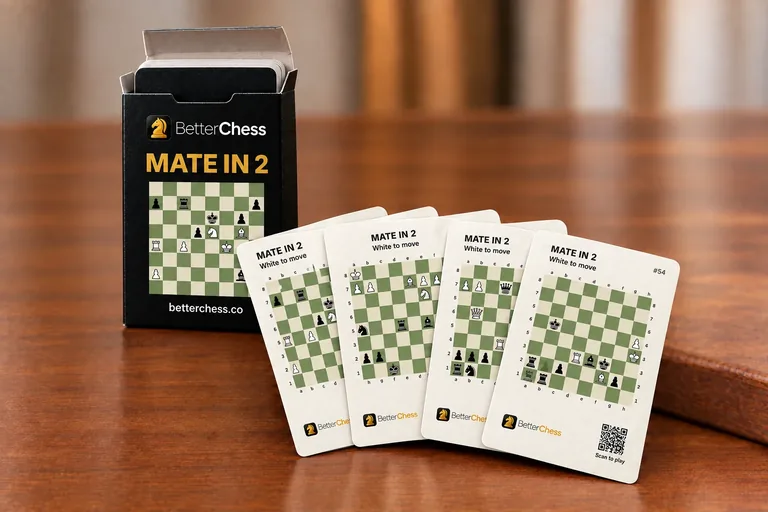
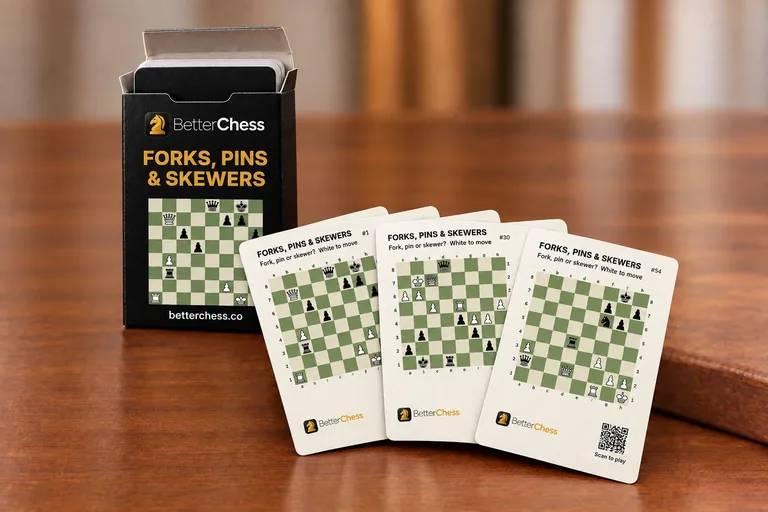
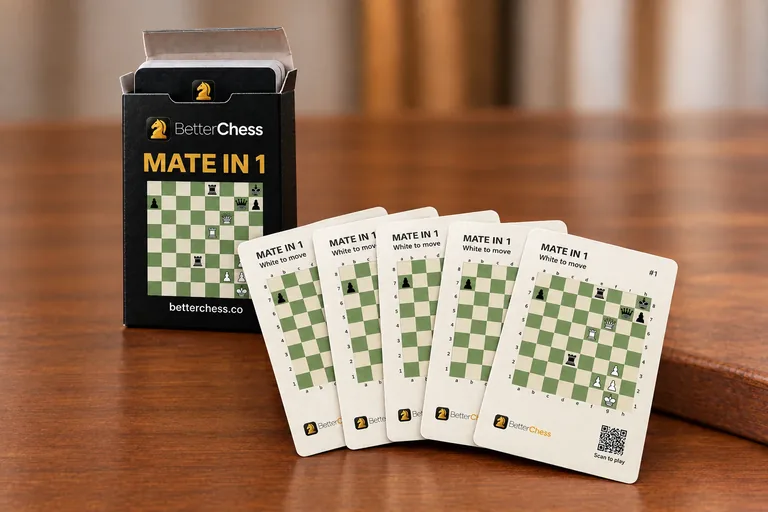
PRINTED CHESS PUZZLE CARDS
Chess puzzle playing card decks
54 poker-size cards in a tuck box. Puzzle on the front, solution on the back.